Procurement · 2026-06-28

What Specification Protects Art Across an Ocean?

A painting can leave the studio in good condition and arrive with a preventable problem. Missing details create that risk.

I protect export artwork with a written configuration that joins condition records, dimensions, finish, packing, labels, and destination needs. The document turns a visual promise into an accountable handover.

I do not wait until packing day to think about transit. I make shipping choices while the artwork, size, and finish are still open.
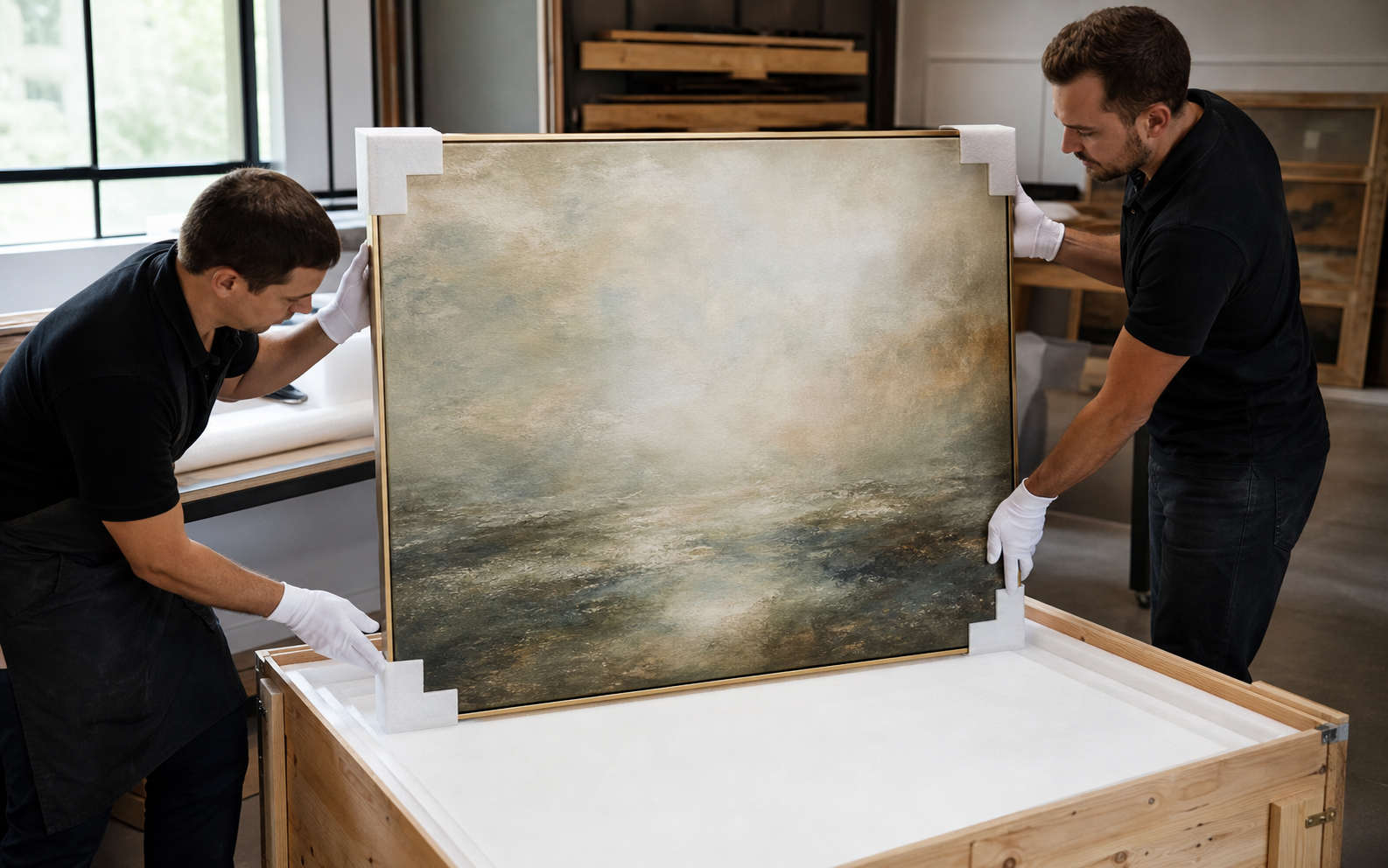
What Specification Protects Art Across an Ocean

What do I record before an artwork travels?

A photograph alone does not explain a work’s condition or its approved finish.

I pair clear images with a simple condition record and product configuration.

Editorial visual for What do I record before an artwork travels

What I examine first

I connect condition, support, packing, and handover before dispatch. I pair clear images with a simple condition record and product configuration. I start with the actual setting, not a mood-board label. I ask who will see the work, from where they will see it, and what practical decision the answer must support. This keeps the discussion close to the room, the buyer, and the final configuration. I do not use a general claim when I can name the visual or physical condition that changes the result.

In this part of the process, I look for proof that a choice can be repeated and explained. I compare the reference with the approved size, finish, and delivery route. I also leave space for the natural differences that belong to artist-made work. A good brief does not erase those differences. It makes them visible before production starts, so the buyer knows what is fixed and what remains expressive.

QuestionWhat I recordWhy it matters
IntentWhat do I record before an artwork travelsIt gives the project a clear decision rule.
ReferenceApproved image, scale, and finishIt keeps the conversation specific.
HandoverQuote notes and final configurationIt makes later checks easier.

What I take from community practice

I also read practitioner discussions, including Reddit r/arthandling, collection shipping discussion, to learn which questions recur in real projects. I treat those comments as individual experience, not a production standard. They help me notice concerns that a formal brief can miss, then I check the relevant detail against the approved project requirements.

Where I slow down

I slow down when a choice could affect rights, handling, installation, or a buyer's expectation. That pause is useful. It gives me time to compare the detail against the full project instead of treating one image or one sentence as the whole answer. I use hand-painted catalog, printed wall art route, and project quotation form when I need the project team to move from an idea to a defined route.

How do size and framing change the packing route?

A rolled canvas, a stretched canvas, and a framed work carry different handling needs.

I choose the packing route after the final finish is known, not before.

Editorial visual for How do size and framing change the packing route

What I examine first

I connect condition, support, packing, and handover before dispatch. I choose the packing route after the final finish is known, not before. I start with the actual setting, not a mood-board label. I ask who will see the work, from where they will see it, and what practical decision the answer must support. This keeps the discussion close to the room, the buyer, and the final configuration. I do not use a general claim when I can name the visual or physical condition that changes the result.

In this part of the process, I look for proof that a choice can be repeated and explained. I compare the reference with the approved size, finish, and delivery route. I also leave space for the natural differences that belong to artist-made work. A good brief does not erase those differences. It makes them visible before production starts, so the buyer knows what is fixed and what remains expressive.

QuestionWhat I recordWhy it matters
IntentHow do size and framing change the packing routeIt gives the project a clear decision rule.
ReferenceApproved image, scale, and finishIt keeps the conversation specific.
HandoverQuote notes and final configurationIt makes later checks easier.

What I take from community practice

I also read practitioner discussions, including Reddit r/arthandling, collection shipping discussion, to learn which questions recur in real projects. I treat those comments as individual experience, not a production standard. They help me notice concerns that a formal brief can miss, then I check the relevant detail against the approved project requirements.

Where I slow down

I slow down when a choice could affect rights, handling, installation, or a buyer's expectation. That pause is useful. It gives me time to compare the detail against the full project instead of treating one image or one sentence as the whole answer. I use hand-painted catalog, printed wall art route, and project quotation form when I need the project team to move from an idea to a defined route.

Why does movement inside a crate matter?

A strong outer crate cannot protect an artwork that can shift inside it.

I look for support, cushioning, and a clear path for handlers.

Editorial visual for Why does movement inside a crate matter

What I examine first

I connect condition, support, packing, and handover before dispatch. I look for support, cushioning, and a clear path for handlers. I start with the actual setting, not a mood-board label. I ask who will see the work, from where they will see it, and what practical decision the answer must support. This keeps the discussion close to the room, the buyer, and the final configuration. I do not use a general claim when I can name the visual or physical condition that changes the result.

In this part of the process, I look for proof that a choice can be repeated and explained. I compare the reference with the approved size, finish, and delivery route. I also leave space for the natural differences that belong to artist-made work. A good brief does not erase those differences. It makes them visible before production starts, so the buyer knows what is fixed and what remains expressive.

QuestionWhat I recordWhy it matters
IntentWhy does movement inside a crate matterIt gives the project a clear decision rule.
ReferenceApproved image, scale, and finishIt keeps the conversation specific.
HandoverQuote notes and final configurationIt makes later checks easier.

What I take from community practice

I also read practitioner discussions, including Reddit r/arthandling, collection shipping discussion, to learn which questions recur in real projects. I treat those comments as individual experience, not a production standard. They help me notice concerns that a formal brief can miss, then I check the relevant detail against the approved project requirements.

Where I slow down

I slow down when a choice could affect rights, handling, installation, or a buyer's expectation. That pause is useful. It gives me time to compare the detail against the full project instead of treating one image or one sentence as the whole answer. I use hand-painted catalog, printed wall art route, and project quotation form when I need the project team to move from an idea to a defined route.

What should the buyer receive before delivery?

A buyer needs enough detail to inspect the shipment without guessing.

I send the final item list, packing route, reference images, and handling notes.

Editorial visual for What should the buyer receive before delivery

What I examine first

I connect condition, support, packing, and handover before dispatch. I send the final item list, packing route, reference images, and handling notes. I start with the actual setting, not a mood-board label. I ask who will see the work, from where they will see it, and what practical decision the answer must support. This keeps the discussion close to the room, the buyer, and the final configuration. I do not use a general claim when I can name the visual or physical condition that changes the result.

In this part of the process, I look for proof that a choice can be repeated and explained. I compare the reference with the approved size, finish, and delivery route. I also leave space for the natural differences that belong to artist-made work. A good brief does not erase those differences. It makes them visible before production starts, so the buyer knows what is fixed and what remains expressive.

QuestionWhat I recordWhy it matters
IntentWhat should the buyer receive before deliveryIt gives the project a clear decision rule.
ReferenceApproved image, scale, and finishIt keeps the conversation specific.
HandoverQuote notes and final configurationIt makes later checks easier.

What I take from community practice

I also read practitioner discussions, including Reddit r/arthandling, collection shipping discussion, to learn which questions recur in real projects. I treat those comments as individual experience, not a production standard. They help me notice concerns that a formal brief can miss, then I check the relevant detail against the approved project requirements.

Where I slow down

I slow down when a choice could affect rights, handling, installation, or a buyer's expectation. That pause is useful. It gives me time to compare the detail against the full project instead of treating one image or one sentence as the whole answer. I use hand-painted catalog, printed wall art route, and project quotation form when I need the project team to move from an idea to a defined route.

Conclusion

I reduce export risk by treating the specification as part of the artwork, not a separate admin task.

Notes

  1. Tate, “Impasto”
  2. Canadian Conservation Institute, “Caring for paintings”
  3. Smithsonian Provenance
  4. U.S. Copyright Office, visual artists
  5. Reddit r/arthandling, collection shipping discussion