How do I label artwork so it reaches the right project room?
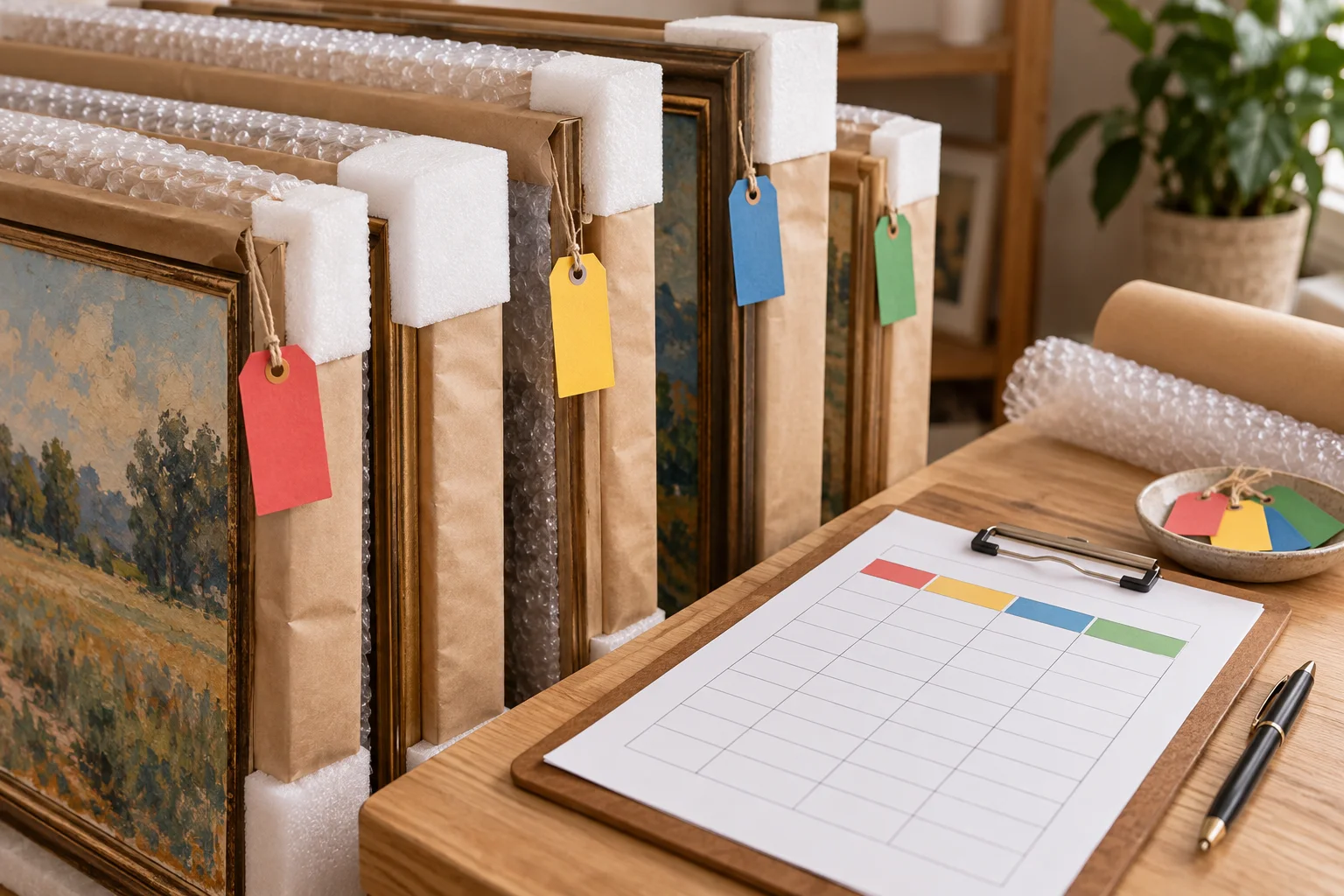
I can receive a complete art order and still struggle to place it correctly. Weak labels can turn installation into guesswork and expose works to extra handling.
I label project artwork with a unique item ID, destination room, design reference and configuration that match the packing list. I place labels on suitable packaging or records, not directly on vulnerable painted surfaces. I verify the mapping at receipt and installation.
I treat a label as a link between the work and its destination. I can make that link clearer by agreeing on codes, version control and the receiving process before dispatch.
Which identifiers should each artwork label contain?
I can use a design name that several rooms share. That name alone may not tell the installer which size or frame belongs in a specific location.
I use a unique item ID plus room or area code, design reference, size and finish. I make the same identifiers appear in the artwork schedule and packing list. I avoid relying only on decorative titles or informal room descriptions.

I make the ID useful across the whole project
I choose a simple item ID that stays stable when the work moves between teams. I do not build an elaborate code that only one person understands. I need the ID to distinguish one installation item from another and connect it to a readable schedule. I keep the room code separate so a destination change does not require pretending that the artwork itself has become a different object.
I add the design reference and configuration. I include the selected canvas size, frame finish and any orientation that matters. I also identify related pieces in a pair or set. A triptych can share a group code while each panel has its own position. I avoid a label that says only lobby art when the lobby contains several works with different sizes and mounting needs.
I compare the proposed codes with the site team’s room system. A room number on an architectural drawing may differ from the final operational number. I name which version the schedule uses and ask the team to confirm it before labels are prepared. I use the hospitality artwork route to connect the artwork plan with that room information. I also keep a readable description beside any barcode or digital identifier. An installer should still understand the destination when a scanner or network connection is unavailable. The label’s job is to reduce uncertainty at the moment of handling, not to make the record look more technical.
| Decision | My check |
|---|---|
| Same design in several sizes | I include size and unique item ID |
| Triptych | I identify group and panel position |
| Room numbering changes | I confirm the current site system |
Where should labels go without risking the artwork?
I can make a label easy to see by attaching it to the wrong surface. Adhesive, pressure or removal can create avoidable handling problems.
I agree on suitable labeling locations with the supplier and receiving team. I use packaging and separate records where appropriate, keep labels away from painted surfaces, and ask how identification will remain with the work after unpacking without harming it.
I distinguish package identification from object records
I plan package labels and artwork records as related but different tools. The outside label helps the receiving team route and inspect a shipment. The artwork record helps the installer confirm the piece after protective packaging has been removed. I do not solve both tasks by sticking a large label onto the painted face or an unconfirmed frame finish. I ask the supplier for an appropriate location and method.
I keep handling instructions separate from destination information when that makes the label clearer. I want the receiver to see the item ID, package count and destination without losing important orientation or handling notes. I also ask how labels should remain legible during transport. I do not cover packing features that the receiver needs to inspect or open according to the supplied instructions. Wrapping choices should protect the work and support its handling route.[2]
I consider what happens after unwrapping. A loose paper record can disappear if no one owns it. A temporary tag can be useful, but its attachment method still needs to suit the work. I ask the team to confirm a safe process instead of inventing a universal labeling method. Conservation guidance emphasizes avoiding pressure on vulnerable canvas and paint during handling.[1] I use that point to keep labels and recordkeeping away from risky contact. I discuss the process through quality control so identification stays connected to the actual assembly, packing and destination needs.
| Decision | My check |
|---|---|
| Outside package | I include routing and package identifiers |
| Painted face | I avoid adhesive and pressure |
| After unpacking | I keep a safe record attached to the item process |
How do I check the packing list against the room schedule?
I can approve two accurate documents that use different codes. The artwork can arrive correctly packed and still be assigned to the wrong room.
I compare the item IDs, quantities, room codes and configurations in both documents before dispatch. I check split packages and grouped works explicitly. I keep one current version and record any difference as an open issue until it is resolved.

I reconcile records before the receiving team needs them
I place the packing list beside the room artwork schedule and compare them line by line. I check the unique item ID first, then the design, size, finish and destination. I do not rely on the total quantity alone. Two works can be counted correctly while their frame finishes or room assignments are reversed. I also check that every scheduled work appears in the intended shipment phase.
I inspect package relationships. A single work can arrive in more than one protective component, and several works can share an outer package. I ask the supplier to make those relationships clear. I want the receiver to know whether a package marked one of three belongs to one object or to a group of separate objects. I also keep panels in a multi-part composition linked to their intended order.
I mark differences as open issues. I do not silently correct one document and leave the other unchanged. I record the revision date and ask the relevant teams to confirm the current version. I keep superseded records available for context without letting them become installation instructions. Caring-for-paintings guidance explains why loss of information can make later care and identification harder.[3] I use that background to treat the schedule as part of the work’s practical record. A reconciled list lets the receiving team spend less time searching for answers while packages are open and vulnerable to unnecessary handling.
| Decision | My check |
|---|---|
| Total quantity matches | I still check each configuration |
| Split package | I map every component to the item |
| Document mismatch | I resolve and version both records |
What should I verify at receiving and installation?
I can trust the outside label and skip the final check. A packaging error or a changed room plan can stay hidden until the artwork is already mounted.
I verify the received item against its ID, configuration, condition record and current destination before installation. I photograph relevant labels and exceptions. I confirm grouped-piece order and keep a record of the actual installed location for future care or replacement planning.

I close the loop at the real destination
I ask the receiving team to record what actually arrives. I compare package identifiers with the packing list and note any missing or unexpected component. I keep condition photos and relevant packaging evidence together with the item ID. I do not ask the team to erase a damaged label or discard all packaging before the identification and condition check is complete. Any concern goes through the agreed supplier or carrier route.
I perform a second mapping check before installation. I confirm the room or area, design orientation and finished configuration. I check multi-panel order against the approved layout rather than decide it from the package order alone. I also confirm that the installation location still matches the current room plan. A last-minute furniture move can change clearance or placement even when the artwork schedule itself has not been revised.
I record the actual installed location. I keep the item ID, date and useful care information available to the team that will maintain the property. I do not leave all records with a temporary installer who will soon leave the project. I ask who will own the final schedule and how later moves will be recorded. This makes a replacement inquiry or condition review easier to explain. It also reduces the chance that a work is moved without anyone knowing where it belongs. I treat successful installation as a traceable handover of an identified object, not only as a photograph of a finished room.
| Decision | My check |
|---|---|
| Receiving exception | I link photos to the item ID |
| Multi-panel work | I verify the approved panel order |
| Installation complete | I record the actual location and record owner |
Conclusion
I use stable IDs, safe labels and matching schedules. Receiving and installation checks keep each artwork connected to its intended room and future care record.