How do I combine separate family photos into one oil painting?
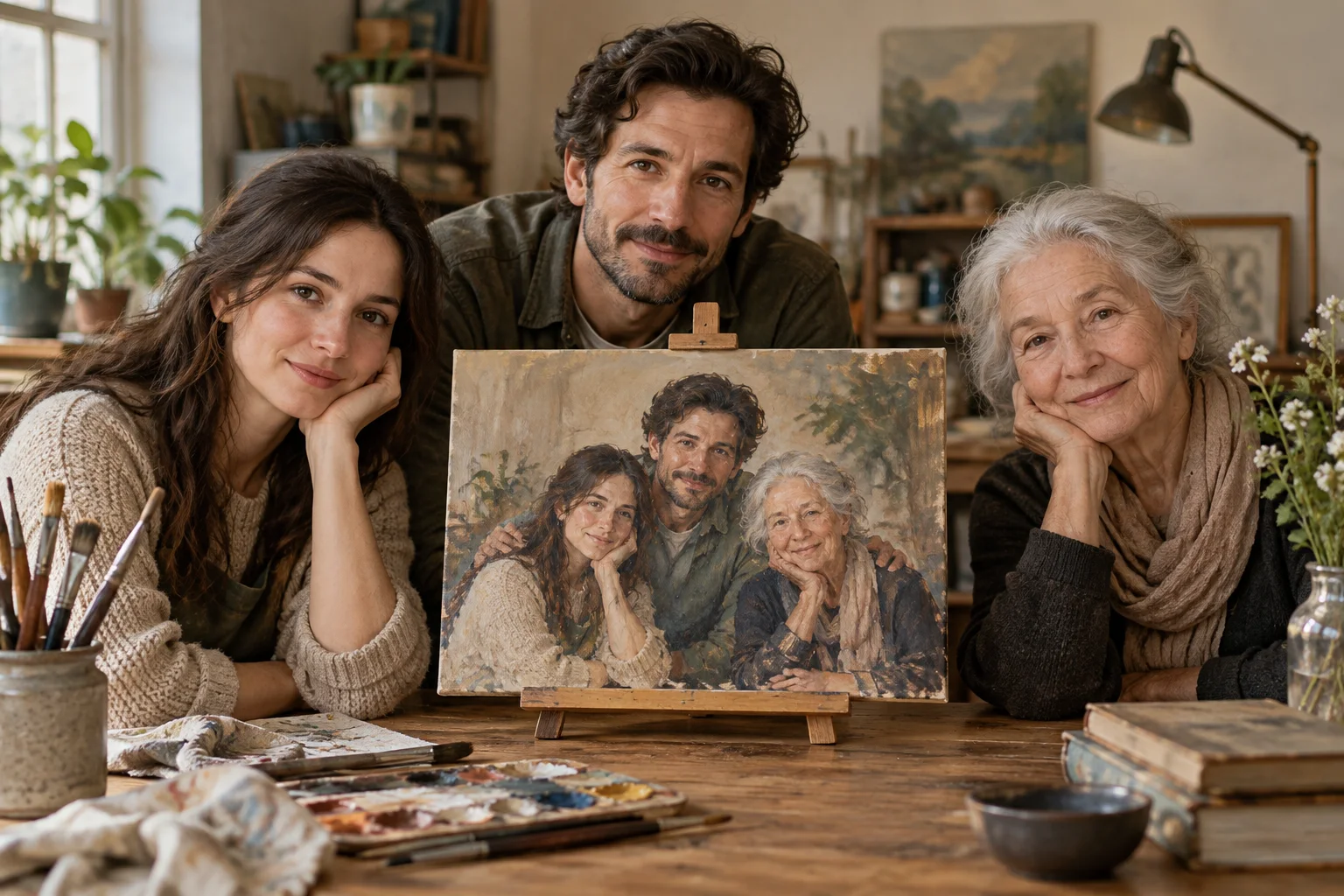
I may have every person’s photo but no picture of everyone together. A weak composite can turn a meaningful family painting into an awkward arrangement.
I combine separate family photos by choosing a shared viewpoint, compatible head angles and a clear group layout. I name one identity reference for each person and review the proposed composition before painting. I disclose any missing detail instead of asking for hidden guesses.
I treat the group as a planned scene, not a row of cut-out faces. I can improve the brief by checking scale, light and relationships before I discuss paint style.
Which separate photos can work together?
I can gather clear photographs that still disagree in angle and light. Those differences can make the family look as if they occupy separate rooms.
I compare camera height, head direction, light and facial expression across the references. I prefer similar viewpoints and provide supporting photos for unclear features. I ask the artist to identify difficult combinations before I approve the group arrangement.
I check compatibility before counting photos
I start by choosing one main image for each person. I write the person’s name beside the file and explain which feature that image should guide. I do not send a large folder without a clear order. A collection of references can help, but it can also create conflicting instructions when one photograph shows a younger face and another shows a different hairstyle. I name the intended age and appearance in plain words.
I compare the direction of each face. A person photographed from above may not sit naturally beside someone photographed from below. I can ask whether the artist has enough evidence to adjust the angle, but I do not assume that any change is simple. A profile may not show the far eye or the full shape of the mouth. I provide another image if I have one and accept a different layout if the missing view remains uncertain.
I then compare light. Strong sunlight on one face and flat indoor light on another can require interpretation. I ask which reference will guide the common lighting in the proposed scene. A real community request for a family memorial portrait shows why separate-photo compositions matter to buyers.[1] I use that question as a starting point, not as evidence that every combination is feasible. I keep the original files and list any requested change so the review can distinguish known features from artistic choices.
| Decision | My check |
|---|---|
| Similar camera heights | I use them as the main set |
| Strongly different angles | I request a feasibility review |
| Different ages | I name the intended appearance |
How should I arrange people so the group feels natural?
I may know who belongs in the portrait but not where each person should sit. An unclear arrangement can leave the artist guessing about family relationships.
I sketch the group’s order, relative height and closeness before discussing detail. I explain who should stand or sit together and whether the scene is literal or imagined. I check overlap, body scale and space around the group in a composition review.
I define relationships through placement
I make a simple diagram with names rather than trying to draw finished faces. I place people in the order I want and note any important relationship. I may want siblings beside each other or a grandparent near the center. I also explain whether the portrait should resemble a formal group photograph or a relaxed moment. Those choices influence posture, spacing and where the viewer’s attention goes.
I check relative scale carefully. A close phone selfie can make one head appear much larger than another head in a distant photograph. I do not copy those apparent sizes into the final plan. I give approximate height relationships when they matter and ask the artist to review body proportions. I also inspect hands, shoulders and clothing overlap. A convincing face can still feel misplaced when its neck or shoulder joins the group awkwardly.
I leave enough space at the edges. A frame can cover part of the painted edge, and a close crop may cut off a meaningful gesture. I ask how the canvas and framing route will affect the composition.[3] I use the photo commission section to discuss the people, crop and intended setting together. I do not treat a quick arrangement preview as a guaranteed finished scene. I use it to catch major placement problems while the plan is still easy to change, before brushwork and drying make later changes more involved.
| Decision | My check |
|---|---|
| Important family pairing | I mark the names beside each other |
| Different source head sizes | I ask for consistent scale |
| Hands near an edge | I review the framing margin |
What should I disclose about an imagined family scene?
I may want relatives from different times together in one painting. If I leave that idea unexplained, the result can suggest a moment that never happened.
I describe the painting as an imagined tribute when the group never shared the photographed scene. I name the intended ages, clothing and setting, and identify changes that need interpretation. I also check photograph permissions and whether everyone involved is comfortable with the plan.
I distinguish a tribute from a literal record
I decide what the scene is meant to say. A memorial group can bring people together who could not have shared one photograph. That can be meaningful, but I do not present the composition as a recovered historical moment. I tell the artist that the setting is imagined and name the details I want drawn from real references. This gives the painting a clear purpose without hiding how it was planned.
I make clothing decisions explicitly. I may want each person in the clothes shown in their own photograph, or I may want a more unified color range. I ask what changes are possible and what new information would help. I do not assume that a uniform, wedding dress or personal object can be reconstructed accurately from a small face photo. If the detail matters, I look for another reference or choose a simpler treatment.
I also check who took the photographs. Permission to use a professional photograph for a painting may need a separate discussion with its copyright owner.[2] I do not treat access to a digital file as permission for every new use. I discuss sensitive family choices with the intended recipient when that is practical. I keep the custom art brief focused on the agreed scene, references and limits. This protects the review from late surprises. It also lets me judge the work against a thoughtful tribute plan rather than an impossible demand to make several unrelated moments look exactly like one original photograph.
| Decision | My check |
|---|---|
| People from different times | I call the scene an imagined tribute |
| Specific clothing detail | I provide a separate reference |
| Professional photograph | I check permission for the intended use |
How do I choose a canvas size and review the composition?
I can fit many faces into a small rectangle on screen. The same plan may feel cramped when I imagine it as a physical painting.
I choose size from the number of people, crop and viewing distance. I compare the size each face will occupy, leave room for the frame, and review the whole layout before fine details. I confirm the approval and revision stages in the quotation.
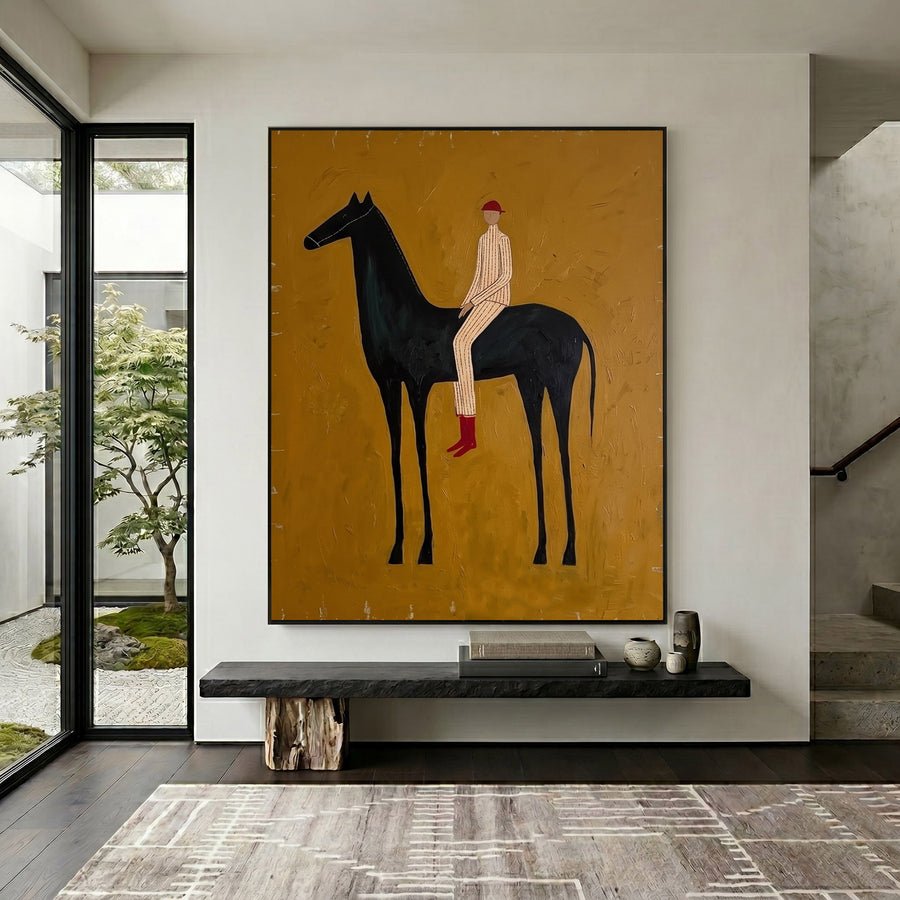
I measure faces inside the whole artwork
I draw the intended outer rectangle on paper or a wall mockup. I then estimate how much of that space the group will occupy. I do not use person count as a fixed size rule because a row of close head portraits differs from a full body scene. A background with important objects also needs space. I ask the artist which layout keeps the faces readable at the planned viewing distance.
I compare two possible sizes with the same composition. I stand where the viewer will usually sit or walk. I check whether each face feels clear enough and whether the painting overwhelms the furniture below it. I include the outer frame in the test. A canvas that fits the wall can still exceed the available width after framing. I keep the finished dimensions separate from the painted image dimensions in the order record.
I review in stages. First I check the group order, body scale and crop. Then I check the individual features and requested changes. I ask which reviews are included and what counts as a new scope request after approval. I do not assume unlimited revisions or a fixed production time. I keep written feedback tied to named people and visible details. A request such as move Anna slightly inward is easier to discuss than a general statement that the family feels wrong. I finish the brief with the agreed size, delivery format and review plan so the project desk can quote the same object I expect to receive.
| Decision | My check |
|---|---|
| Many full body figures | I allow room for posture and spacing |
| Close face grouping | I compare face size at viewing distance |
| Layout approved | I record the agreed crop and person order |
Conclusion
I plan compatible references, natural placement and clear limits before choosing size. A family composite becomes easier to review when every person and change has a purpose.