What Should I Check When a Painting Arrives with Shipping Damage?
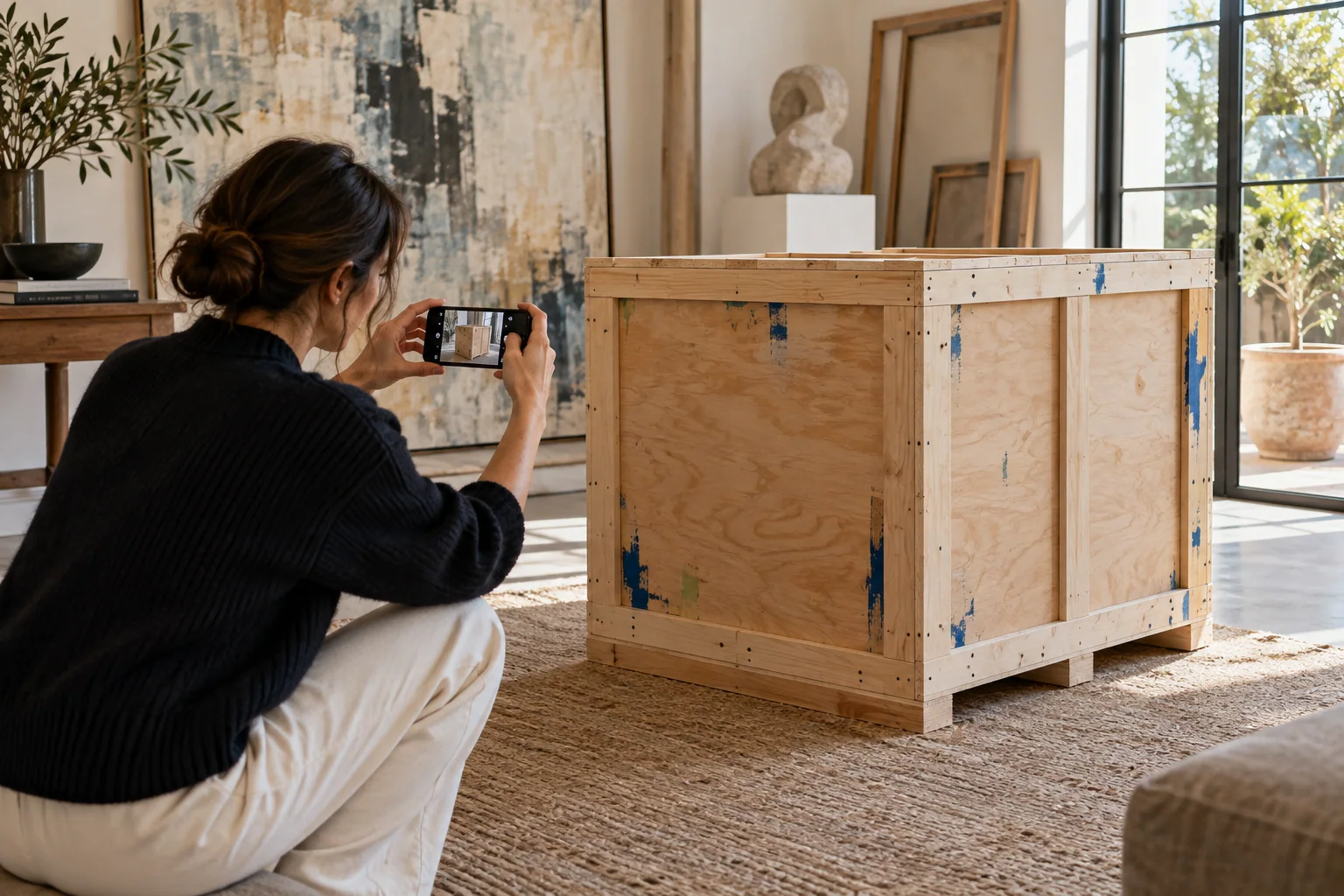
I can open a painting and discover a damaged corner or loose support. The shock makes me rush. I slow down and preserve the evidence first.
I document the package and visible condition, keep the artwork supported, retain the packing, and contact the agreed seller or shipping contact with the order reference. I follow the order and carrier's current notice process. I avoid touching damaged paint or attempting a repair before the concern is reviewed.
I use a calm inspection sequence to protect the object and make the next conversation useful. I separate what I can observe from what a qualified specialist needs to assess.
What should I record before I remove the packing?
I can throw away a damaged box because I want to see the artwork. That removes useful information. I record the exterior and opening sequence before clearing the area.
I photograph the unopened package, labels, dents or punctures, and the packing as I remove it. I keep the order reference and delivery details. I retain the materials if I find a concern, and I do not assume that an intact box proves the artwork inside is undamaged.

I make a useful visual record
I take a full package view before I focus on a damaged corner. I want the record to show where the concern sits on the whole shipment. I include the shipping label without posting private addresses publicly. I then photograph each relevant layer of packing as I remove it, provided I can do so safely.
I do not turn the inspection into an elaborate film that delays a notice. A clear set of images is often easier to share and review. I keep the original files rather than relying only on screenshots from a chat application. I record the date and the order reference with them.
I preserve the connection between object and package
I keep the packing near the artwork until the review process tells me what to do next. I do not reuse the box or remove protective parts that may explain how the work was supported. I also note whether the item could move inside the package. I describe what I see rather than immediately assigning blame.
| Record I make | Detail I include |
|---|---|
| Exterior view | I show the whole package and concern. |
| Packing view | I show the supports as found. |
| Item view | I connect the artwork to the order. |
A Reddit buyer described damage to both a frame and stretcher after an arranged shipment.[1] I use that example to understand the record a review may need. I do not assume the same cause or responsibility applies to my shipment. I check XM's quality-control guidance before delivery when I want to know the planned condition records.
How do I inspect the painting without making a problem worse?
I can press a loose canvas or test a chipped surface with my fingers. That can add damage. I inspect with support and leave treatment to a specialist.
I keep the artwork supported, avoid touching the painted face or canvas back, and inspect visible frame and support concerns without forcing parts into place. I stop if paint is lifting, the support is unstable, or safe handling is uncertain. I ask a qualified specialist about treatment.

I separate observation from repair
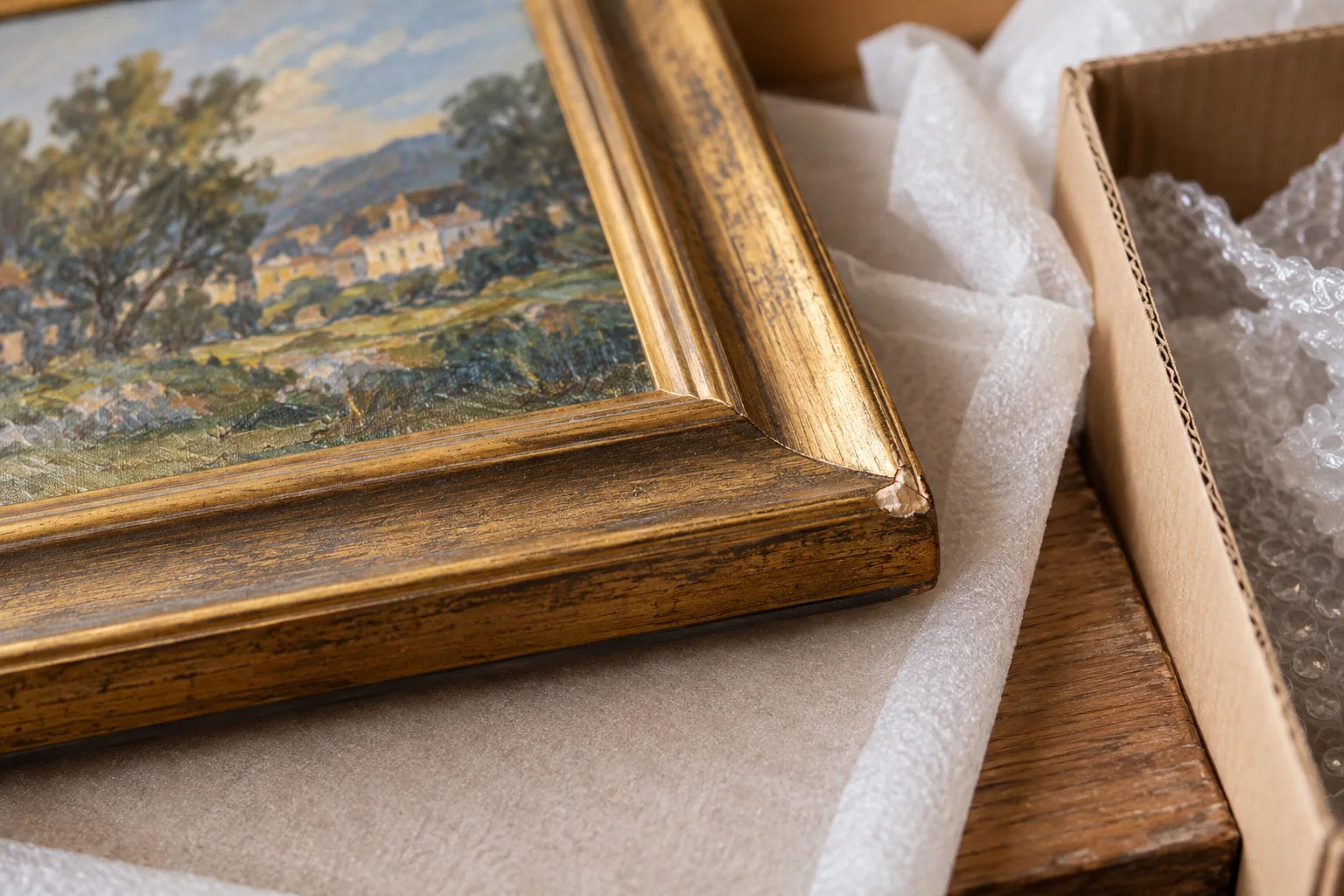
I look for changes that I can describe clearly. I might see a chipped frame corner, a loose fitting, a dent, a tear, or paint that appears lifted. I do not test the concern by pushing, rubbing, or bending the work. I keep the object in the position recommended for its safe support and ask for help if I cannot handle it securely.
I avoid using a repair tutorial before the seller or carrier has reviewed the concern. A small frame chip and a disturbed painted surface are different problems. I do not assume that a quick cosmetic fix is suitable for the actual materials. I also avoid moving the work repeatedly just to obtain another photograph.
I make the images easy to interpret
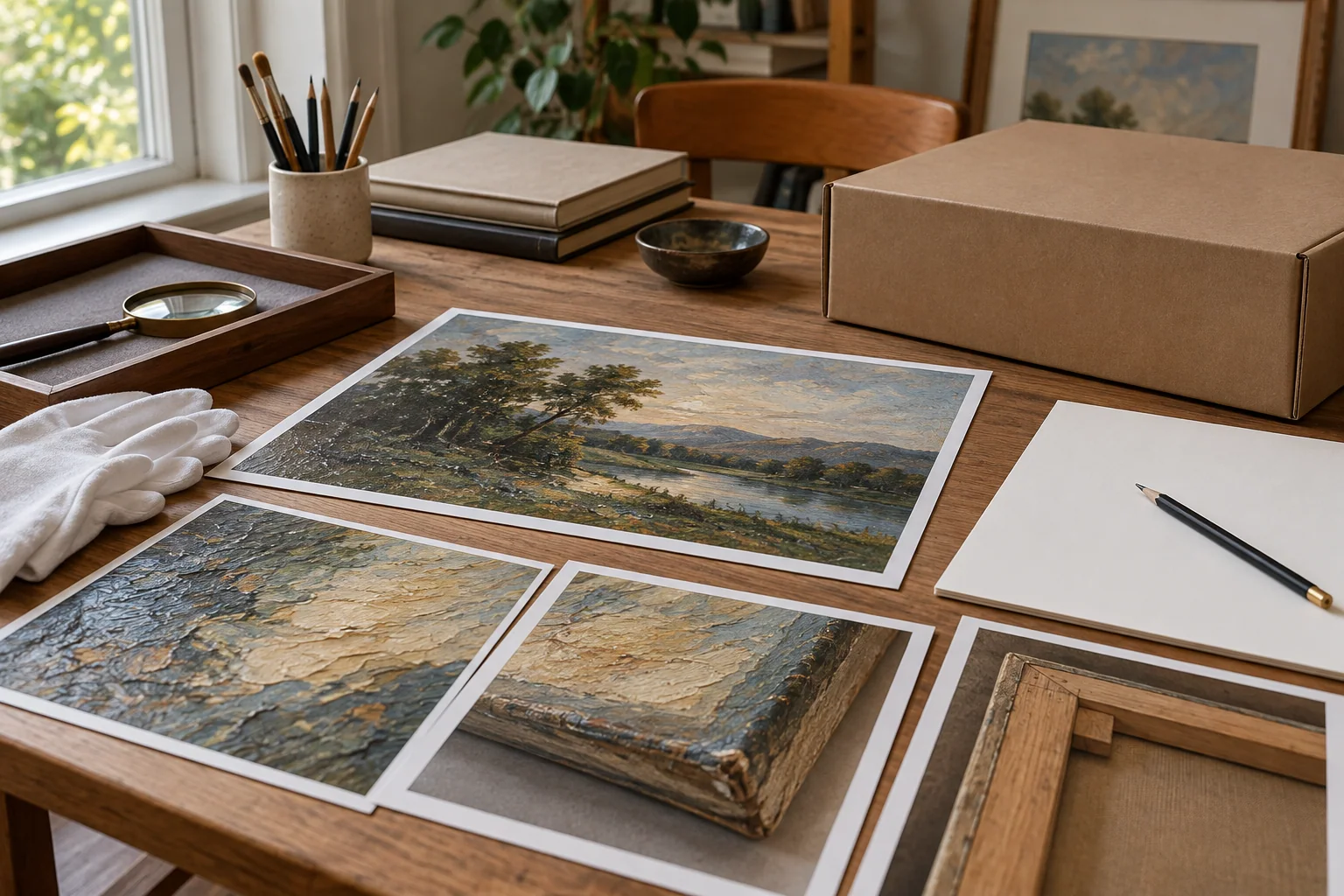
I take one full view and a clear detail of each concern. I show enough surrounding area to locate the detail. I can place a ruler nearby for scale without allowing it to touch the paint. I avoid strong filters or editing that changes the apparent color or shape of the damage.
| Concern I observe | Action I take |
|---|---|
| Frame damage | I document it without forcing the frame. |
| Surface lifting | I avoid touching or cleaning the paint. |
| Unstable support | I stop handling and ask for advice. |
The Canadian Conservation Institute explains the importance of proper handling and the kinds of damage that handling can cause.[2] I use that principle to keep my inspection limited. I let a qualified person decide what treatment or movement is appropriate when the object's condition makes that uncertain.
Who should I contact, and which details should I send?
I can send a worried message without enough information for anyone to act. The conversation then stalls. I send a short condition summary with the right references.
I contact the party named in the order's arrival or concern instructions. I include the order number, artwork reference, delivery date, package views, item views, and a plain description. I check the current carrier process when relevant and ask who is responsible for filing any shipping claim.
I use the agreed contact route
I read the order confirmation and shipping instructions before choosing the next contact. The seller may arrange the shipment, or I may have hired the carrier separately. Those situations can require different conversations. I do not assume that the driver, seller, and insurer have the same role in every delivery.
I write one clear message that names the item and concern. I attach the useful photographs and keep the originals. I ask which further records are needed and whether the artwork should remain in its packing. I do not post personal delivery details on a public forum as a substitute for contacting the agreed party.
I check the actual notice process
I review the current instructions for the carrier and the written order terms. FedEx provides its own claims process, which is one example of why carrier-specific instructions matter.[3] I do not copy a fixed notice deadline from another shipment or assume that an older forum reply describes the current process for my order.
| Information I send | Reason I include it |
|---|---|
| Order and artwork references | I identify the correct item. |
| Delivery and condition record | I establish the reported concern. |
| Package and item views | I support a useful review. |
I use XM's contact page when its project desk is the agreed order contact. I ask who will coordinate the next step. I want a clearly defined review route rather than an unsupported promise that every concern will receive the same remedy.
What should I agree on before any repair, return, or replacement?
I can accept the first suggested fix because I want the problem gone. That can leave key details open. I confirm the proposed remedy and handling plan in writing.
I confirm the proposed remedy, who arranges any transport or treatment, which costs are covered, and what evidence is needed. I keep the original packing unless instructed otherwise. I do not authorize a repair or ship the artwork again until the relevant parties agree on the next step.
I evaluate the proposed remedy against the concern
I ask whether the suggestion addresses the actual condition and the intended use of the artwork. A new frame may resolve frame damage without answering a surface problem. A replacement may require a new approval and schedule. A repair may need a qualified specialist who can assess the materials. I ask those questions before treating every option as equivalent.
I keep the discussion tied to the order terms and the reported condition. I do not assume that a seller's general website wording settles every part of an individual case. I also avoid promising myself a particular insurance outcome before the responsible party has reviewed the evidence.
I plan the next movement carefully
I ask for a written packing and transport plan if the work needs to travel again. I confirm whether the retained packing is suitable or whether new support is needed. I do not send an unstable painting in a reused carton simply because the carton held the first shipment. I ask who books the return and where it should go.
| Remedy detail I confirm | Question I answer |
|---|---|
| Scope | I know which concern is addressed. |
| Cost and arrangement | I know who coordinates the next step. |
| Handling instructions | I know how the object should move. |
I save the agreed plan, photographs, and correspondence together. I want the next step to protect the artwork as well as resolve the order concern. I keep my description factual and let the appropriate specialist, seller, or carrier make the decisions within their actual role.
Conclusion
I respond to shipping damage by preserving evidence, limiting handling, and following the agreed contact process. I confirm the remedy before I repair or move the artwork again.