Should I Choose Rolled, Stretched, or Framed Canvas?
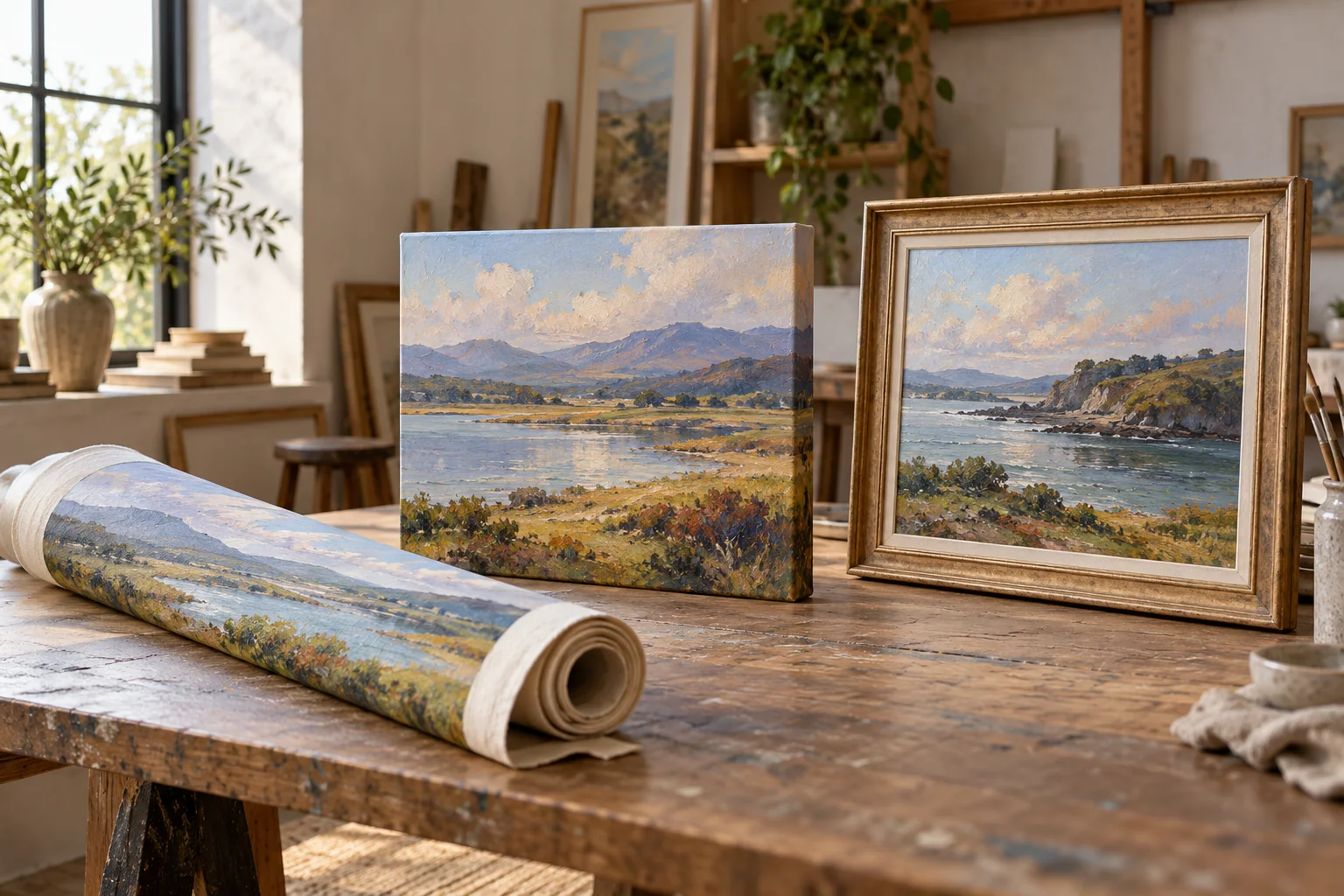
I can choose the right painting and still receive something I cannot hang. The delivery format creates that surprise. I compare the complete route before ordering.
I choose rolled canvas when I plan local stretching or framing, stretched canvas when I want the work mounted on stretcher bars, and framed canvas when I want a confirmed outer frame. I compare finished dimensions, local preparation, packing, hardware, and total cost rather than freight alone.
I treat the finish as part of the artwork decision. I use the following questions to compare what arrives, what still needs work, and which route suits the selected surface.
What does each delivery format actually include?
I can read canvas and assume ready to hang. A listing may mean something else. I ask the supplier to describe the delivered object in plain words.
I confirm whether the quote includes a loose painted canvas, canvas mounted on stretcher bars, or a stretched work with an outer frame. I also confirm the edges, backing, and hanging hardware. I do not assume that a room photograph shows every item included in the order.

I describe the object rather than the label
I ask what I will lift out of the package. Rolled canvas normally needs local preparation before it becomes a wall-ready object. Stretched canvas has a support structure, but it may still need a suitable hanging arrangement. A framed piece adds an outer frame, but its exact profile, color, gap, and hardware remain details that I should confirm.
I read the written options alongside the photograph. A styled room can show a frame that belongs to an illustration rather than the standard supplied option. I ask whether the edge treatment is painted, wrapped, or left for a frame. I also ask whether the selected design can use the finish shown in the reference.
I keep the frame choice specific
I do not treat framed as one universal product. A floating frame can leave a visible space around the canvas. A different frame can overlap part of the edge. I compare the complete outer dimensions and the effect on the composition. I also ask a qualified framer about the support and fitting needs of the selected painting.[1]
| Format I compare | Preparation I confirm |
|---|---|
| Rolled canvas | I plan local stretching or framing. |
| Stretched canvas | I confirm edges and hanging hardware. |
| Framed artwork | I confirm the complete frame specification. |
I use XM's artwork collection to select the work before I finalize the supply format. I keep the two decisions connected because a beautiful image does not tell me how the object will arrive.
When does rolled canvas make sense, and what should I check first?
I can save on a shipment and spend more than expected after arrival. Local stretching changes the comparison. I check the local work before choosing a rolled route.
I consider rolled canvas when the selected surface is suitable and a local framer can prepare it. I confirm the painted area, extra canvas margin, rolling method, local stretching cost, and final dimensions. I do not roll or unroll a delicate painted surface without appropriate instructions.
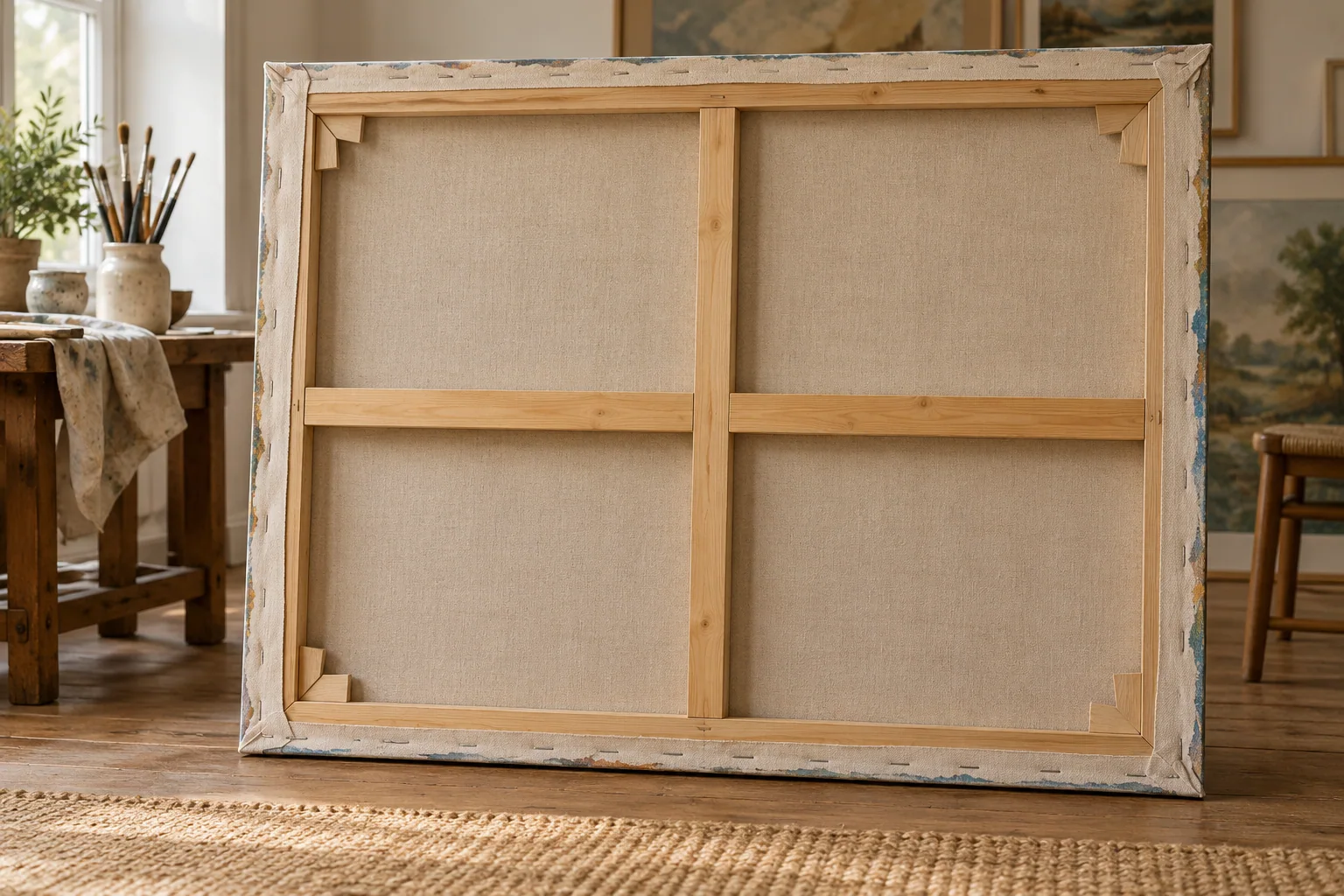
I ask the local framer before ordering
I show the framer the proposed painting, its size, and the intended finish. I ask what margin the work needs for stretching and how the frame will affect the visible image. I want those answers before the supplier paints or cuts the final canvas. I also check whether the local shop can handle a work of that size.
I request a local estimate that includes the actual tasks I need. Stretching, a frame, backing, and hanging hardware can be separate items. I check the likely turnaround time because local preparation can matter to a gift or opening date. I do not assume that every framer can begin as soon as the shipment arrives.
I check whether the painted surface suits the route
I ask the supplier whether the selected medium and texture can travel rolled. I avoid assuming that every canvas-based artwork is flexible in the same way. A thick or fragile surface can need a different support and packing method. I leave technical handling decisions to the maker and qualified specialists rather than copying a generic online method.
| Rolled-route detail I confirm | Why I need it |
|---|---|
| Canvas margin | I preserve room for local preparation. |
| Surface suitability | I avoid an unsuitable rolling route. |
| Local quote | I compare the actual finished cost. |
A Reddit discussion about rolled artwork highlights the extra stretching decision after purchase.[2] I use that as a practical buyer concern. I include the local step in my own cost and arrival plan instead of treating the tube as the end of the order.
How do I compare the total cost and finished size fairly?
I can compare two prices that cover different objects. The cheaper offer then looks better than it is. I put the same finished result into both comparisons.
I compare artwork, stretching, frame, packing, freight, any applicable import charges, local preparation, and installation scope. I use the finished outer dimensions for the wall test. I ask the quote to identify included and excluded items instead of assuming that one headline price covers everything.
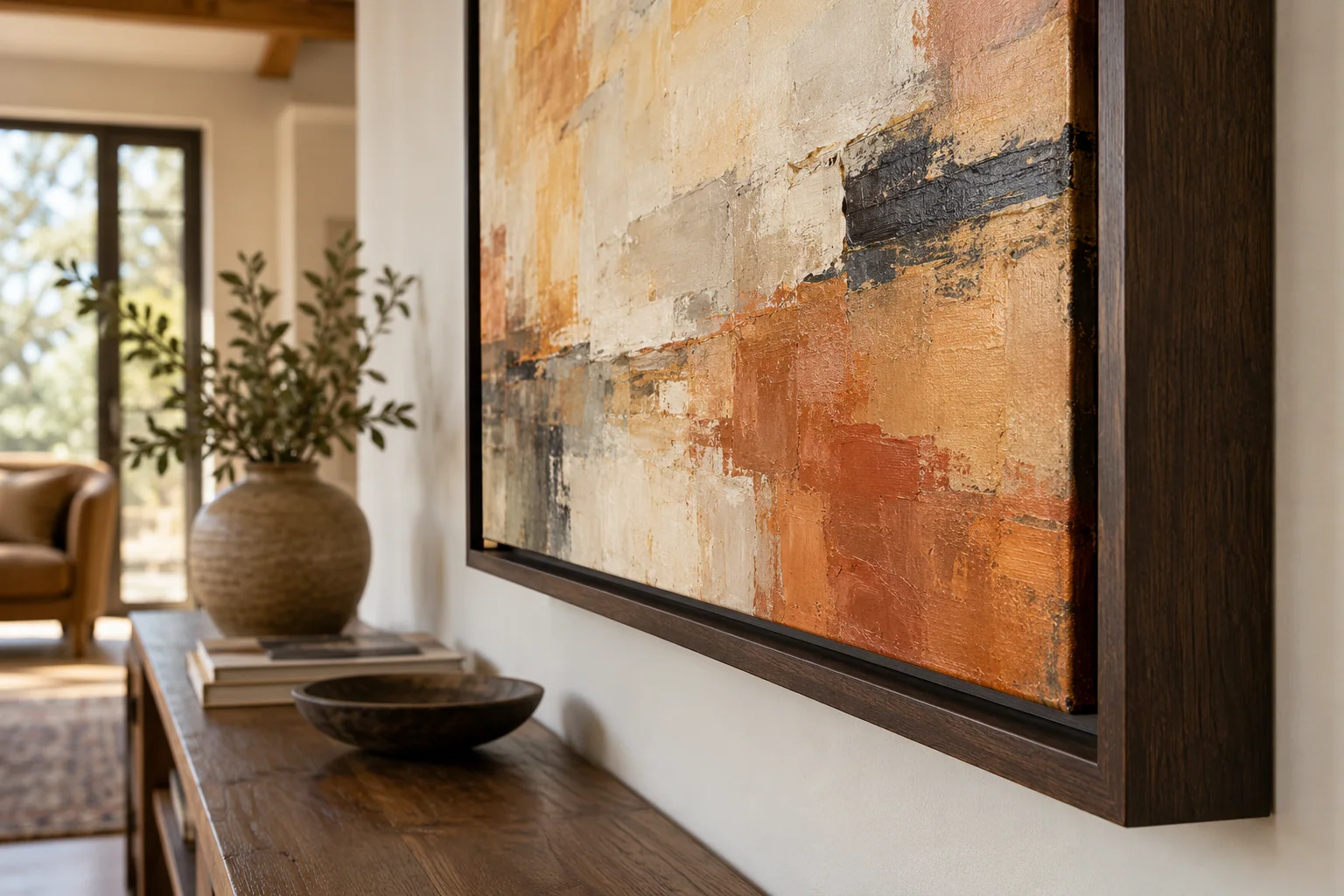
I compare equivalent outcomes
I make a simple list of the work required for each route. A rolled option may have a lower shipping charge because the package is smaller, but I still need to add local stretching and the chosen frame. A framed route may reduce local preparation, but I need to confirm its hardware and packing. I compare the object I will actually display.
I ask which party arranges freight and which costs the quote covers. I do not publish a universal duty estimate or promise that an international delivery has no extra charge. The destination, order terms, and applicable rules determine those details. I ask the project desk to explain the current quotation for my destination.
I use one size language throughout
I write down the painted area, the stretched dimensions, and the framed outer dimensions when those numbers differ. I use the final outer size to test the wall. I also check depth and weight if the work will sit in a recess or on a wall with limited mounting options. I ask an installer to confirm the wall and fixing requirements where needed.
| Cost or size I compare | Record I request |
|---|---|
| Local work | I ask for an itemized local estimate. |
| International delivery | I confirm the stated shipment scope. |
| Finished dimensions | I include the frame's outside edges. |
I use the project contact form to share the artwork reference, destination, and desired finished result. I ask for an order-specific comparison rather than a broad claim that one format is always cheaper or easier.
What should I confirm about packing and arrival?
I can finish the frame decision and ignore transit. A large framed work needs more planning. I confirm packing and inspection before the shipment leaves.
I confirm the approved delivery format, packing method, condition views, package dimensions, arrival instructions, and contact route for concerns. I retain packing materials if I find damage. I do not assume that a strong outer box alone prevents movement or surface contact inside it.
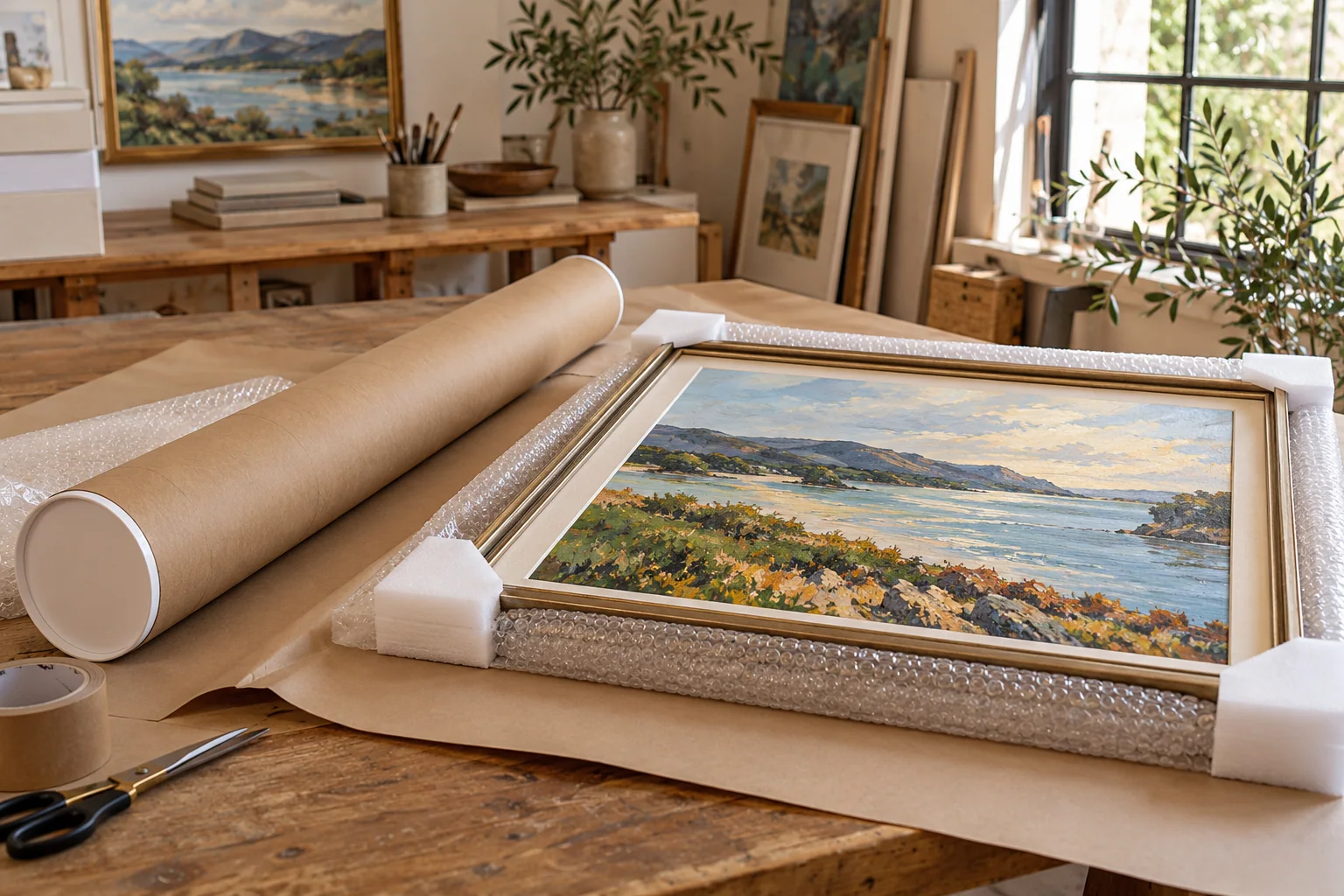
I connect packing to the actual object
I tell the supplier which finish I have approved and ask how that object will be supported. A loose canvas, a stretched work, and a framed piece need different handling plans. I ask whether the packing keeps pressure away from the paint and protects vulnerable frame edges. I do not prescribe one packing recipe without knowing the materials and condition.
I request useful condition views before dispatch. I want a full image, relevant details, and the final finish visible. I keep the package information and order reference together. I use professional conservation guidance as a reminder that wrapping depends on the painting's condition and travel needs, not simply on its dimensions.[3]
I plan a calm inspection
I make space for the package before it arrives. I arrange help for a large or heavy work instead of opening it in a narrow hallway. I inspect the exterior and document concerns before removing the packing. I keep the artwork supported and avoid touching the painted face. I contact the agreed project desk if I find damage or a mismatch.
| Arrival step I plan | Reason I plan it |
|---|---|
| Clear inspection area | I avoid rushed handling. |
| Condition photographs | I preserve useful evidence. |
| Packing retention | I support a review of any concern. |
I confirm the order's notice and remedy terms before delivery. I do not assume that the supplier, carrier, or insurer has the same responsibility in every shipment. I want the contact and records ready so a concern can be reviewed against the actual agreement.
Conclusion
I choose a delivery format by comparing the complete finished object, local work, total scope, and transit plan. I confirm those details before approving the artwork.