How Can I Commission a Portrait from a Photo Without Losing the Likeness?
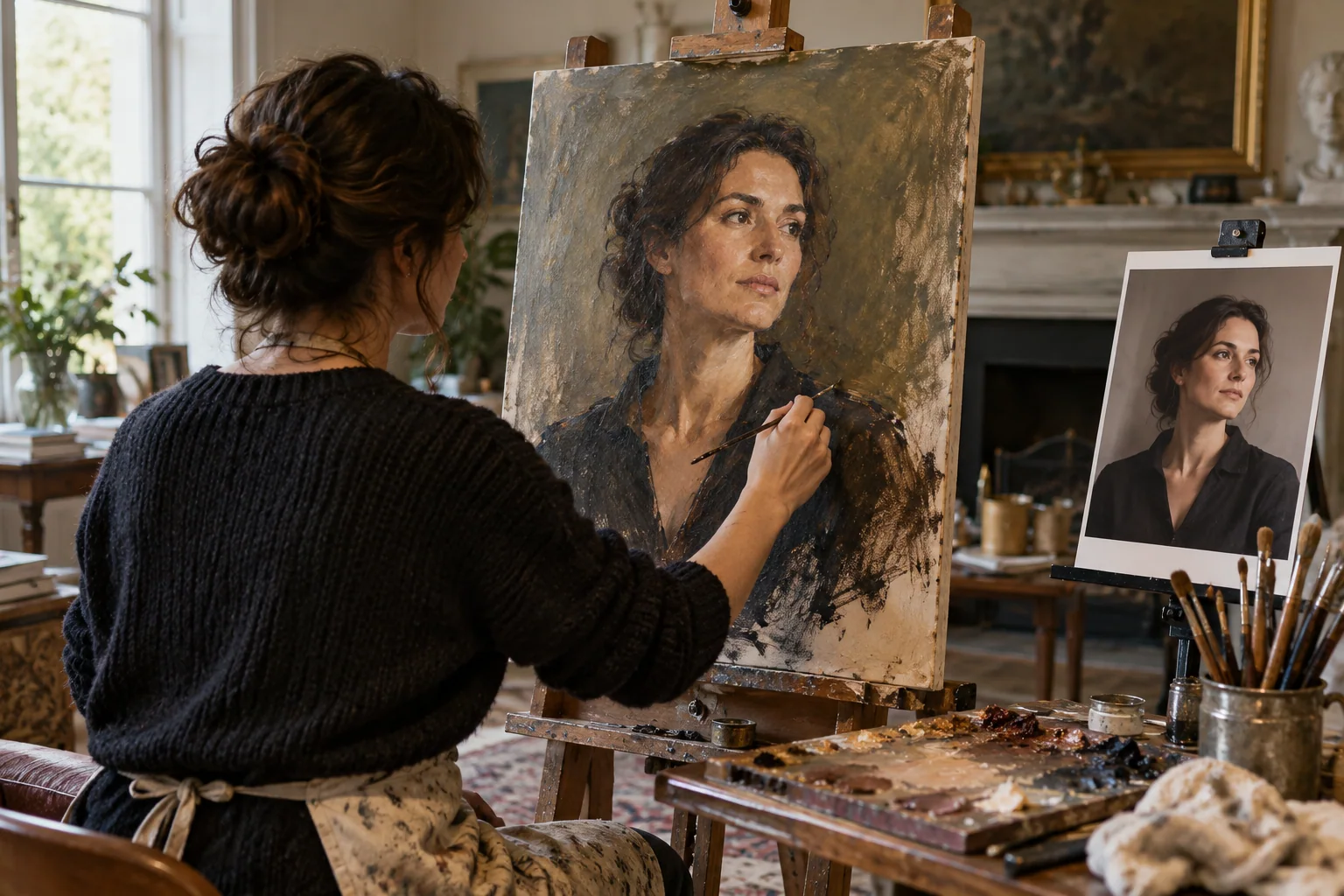
I can love a photo and fear that a painted portrait will miss the person in it. That risk matters. I define likeness and style before commissioning.
I commission a portrait by choosing clear reference photos, matching the artist's style to my goal, identifying important facial and personal features, and agreeing on review stages. I confirm composition, revision scope, privacy, size, and delivery timing before work starts.
I do not expect a painting to behave like a photo filter. I use the following steps to protect the details that matter while leaving room for a thoughtful painted interpretation.
Which reference photos give the artist enough useful information?
I can choose a meaningful photo that hides half the face. The artist then has to guess. I separate emotional importance from the photo's practical clarity.
I choose a sharp main photo with clear features, helpful light, and the expression I want. I add supporting images when they clarify details. I tell the artist which image controls the pose, expression, and likeness, and I ask for a review before combining references.
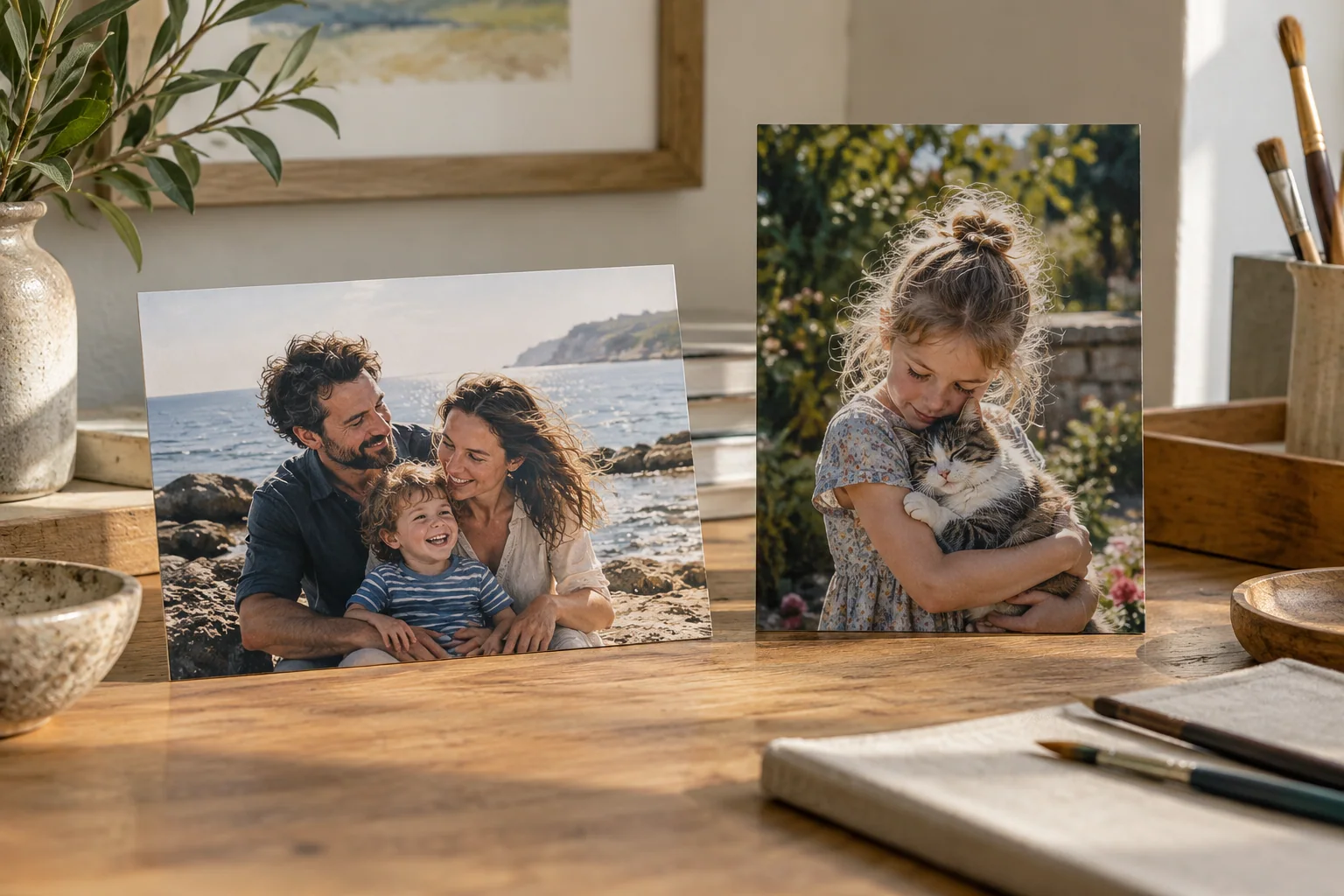
I choose one main reference
I start with the photograph that carries the expression or moment I want to preserve. I then check whether the eyes, mouth, face shape, and important personal details are visible. I avoid treating a small social-media screenshot as equal to the original file. I ask the artist to review the actual image before I assume it can support a large realistic portrait.
I add other images only when they answer a specific question. A supporting photograph might show the correct eye color or a feature hidden by a shadow. I label its role in plain language. I do not send twenty photos and leave the artist to decide which face, pose, and expression I mean.
I discuss changes before the composition is fixed
I state any requested changes to clothing, background, pose, or the number of people. I ask whether the change can be made convincingly with the references I have. I understand that combining people from separate photographs can create problems with light, scale, and viewpoint. I want those limits discussed early.
| Reference I send | Role I explain |
|---|---|
| Main photograph | I choose the pose and expression. |
| Supporting photograph | I clarify a specific feature. |
| Style example | I show the kind of painting I want. |
A Reddit portrait request that combines separate subjects shows why this distinction matters.[1] I use that concern to improve my brief. I can begin with XM's photo painting and frame preview, then ask whether the available references suit the requested style and size.
How do I decide between realistic and expressive portrait styles?
I can approve an artist whose style I admire and still expect photographic detail. That mismatch creates disappointment. I compare style and likeness as separate choices.
I compare relevant portraits from the artist's portfolio, then explain how much realism, visible brushwork, and simplification I want. I identify the features that must remain recognizable. I do not use an unrelated abstract painting as evidence of portrait skill.
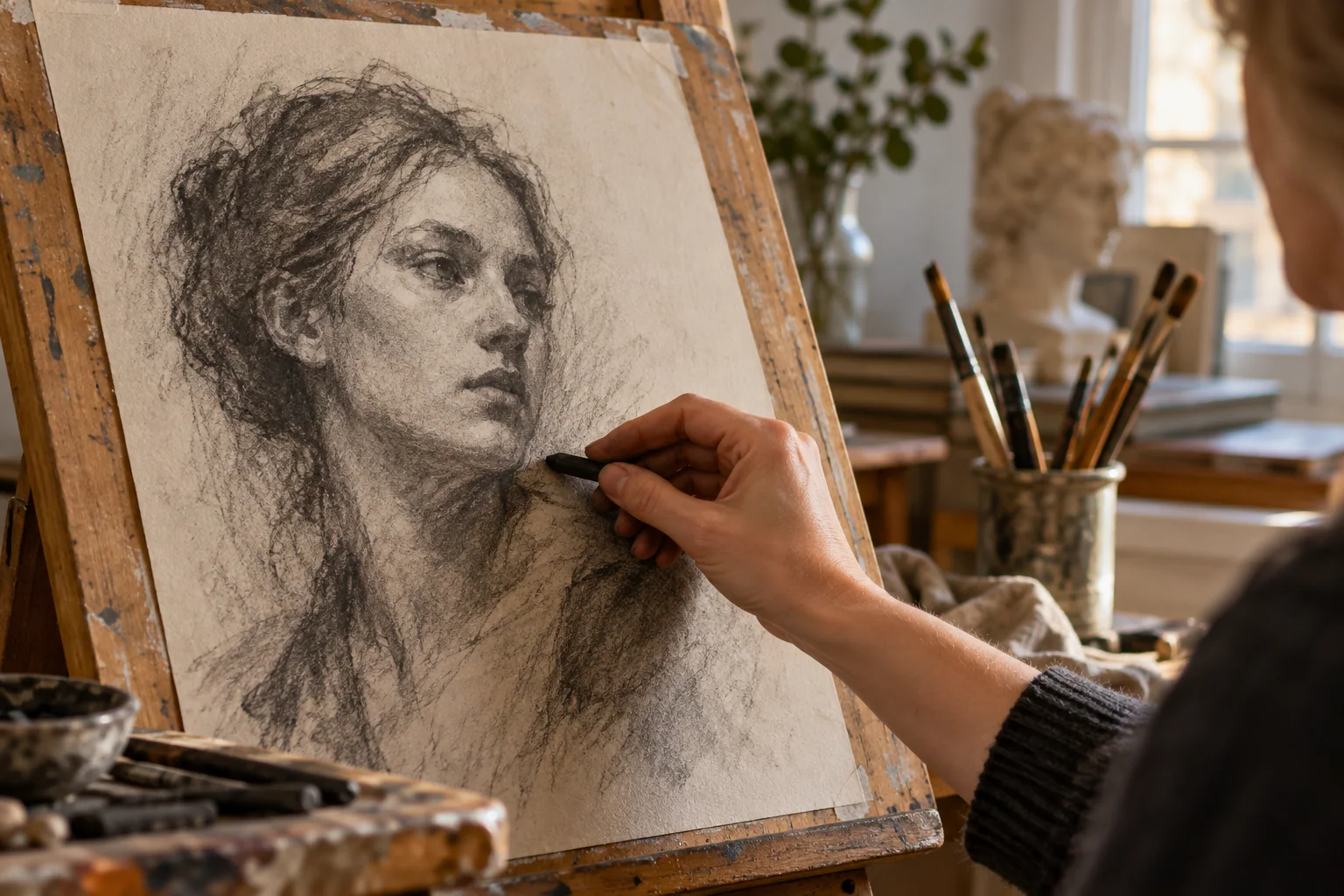
I compare portraits with similar demands
I look for work with a similar number of subjects, level of detail, and painting style. A loose single-person portrait does not tell me how the artist handles a detailed family group. A strong animal painting does not automatically answer my questions about human faces. I ask for relevant examples when the supplied portfolio leaves that gap open.
I decide how closely I want the painting to follow the reference. I might prefer a recognizable person with broad expressive marks, or I might want careful facial proportions and a quieter background. I do not rank one style above the other. I choose the style that fits the purpose of the portrait and the artist's demonstrated strengths.
I define the features that matter most
I name a few personal details rather than asking for perfect likeness without explanation. I might focus on the eye line, a familiar smile, the shape of glasses, or a dog's markings. I also state what can be simplified. That distinction gives the artist a clearer target and makes later feedback more useful.
| Choice I make | Detail I confirm |
|---|---|
| Realism level | I describe how closely the image follows the photo. |
| Surface style | I choose quiet or visible painted marks. |
| Personal features | I identify the details I cannot lose. |
Marketplace listings use phrases such as portrait from photo and hand-painted oils to describe very different styles.[2] I use those phrases to find options, then inspect the actual examples. I do not treat a listing title as a promise of a particular level of likeness.
What approval stages and revision terms should I agree on?
I can wait until the painting is finished to mention a wrong pose. Late changes become harder. I agree on useful checkpoints before the artist starts.
I agree on a composition review, any later likeness or progress review, and the final approval stage. I ask which changes belong to each stage, how many review rounds are included, and whether extra changes affect cost or timing. I keep feedback clear and tied to the agreed brief.
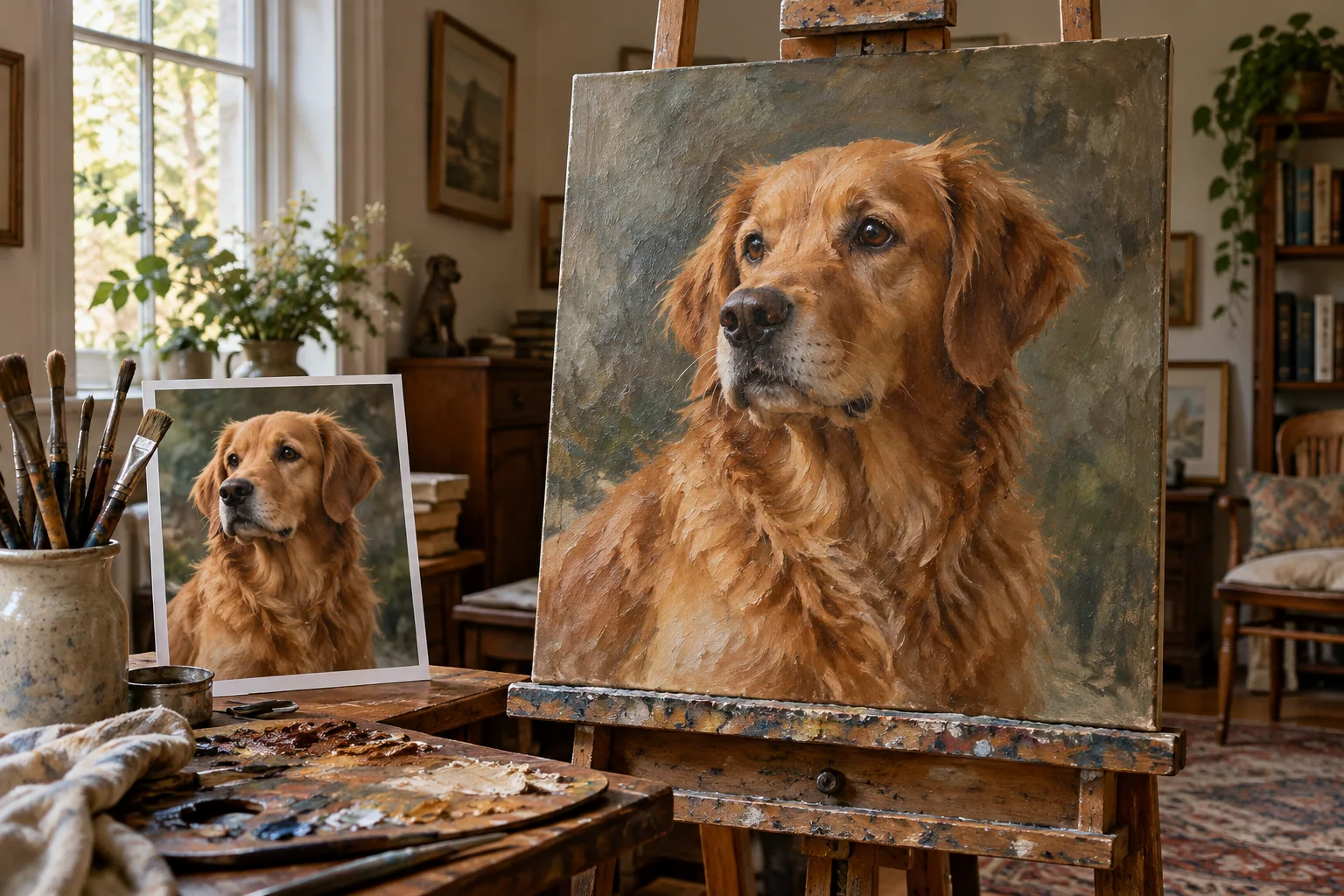
I match the checkpoint to the decision
I use an early composition review to check pose, crop, background, and subject placement. I do not expect that rough stage to show every final facial detail. I use a later review for the features that need a clearer painted form. I ask the artist to explain what each stage can reasonably show before I judge it.
I also confirm whether every stage is part of the quoted process. I do not assume that a supplier provides unlimited progress photographs or a physical sample for every portrait. I want the review route written down so both sides know when I need to respond and what happens if I am unavailable.
I make feedback specific
I compare the review image with the main reference and the agreed style. I might say that the eyes sit too low, the smile feels wider, or the dog needs a lighter marking near one ear. I avoid replacing those observations with a general statement that the work feels wrong. I ask the artist which correction is possible at the current stage.
| Review stage I use | Decision I check |
|---|---|
| Composition | I check pose, crop, and background. |
| Likeness | I check important personal features. |
| Final approval | I check the agreed result and finish. |
I separate a correction to the agreed brief from a new creative request. I understand that a new pose or another person can change the scope. I confirm any added cost and revised schedule before authorizing that change. I keep the approved record with the final order rather than relying on memory.
How do I protect the personal meaning and practical details of the order?
I can focus on the face and forget photo privacy, gift timing, or framing. Those details still affect the result. I confirm them before approving the order.
I confirm permission to use reference images, how files are handled, whether the portrait may be displayed publicly, and the final supply format. I share the required arrival date and agree on the order terms. I do not assume that owning a photo gives me every right to reproduce it.
I ask before sharing sensitive references
I send only the images needed for the brief. I avoid including unrelated personal documents or private details in the same folder. I read the supplier's privacy information and ask about any concern that it does not address. I also ask whether photographs of the finished portrait may appear in a portfolio. I do not assume that a general service inquiry settles that permission.
I check image rights when I use a professional photograph or another person's artwork. The U.S. Copyright Office explains that photographs and other visual works can carry copyright.[3] I use that point as a reason to seek permission where needed, rather than treating my possession of an image file as the whole answer.
I plan the gift as a delivered object
I state the required arrival date rather than only the celebration date. I leave time for inspection, framing, and wrapping if the order needs them. I ask whether the quote supplies rolled canvas, stretched artwork, or a framed piece. I confirm the finished outer dimensions before I choose a display place or a gift box.
| Detail I confirm | Question I resolve |
|---|---|
| Photo use | I know what permission I need. |
| Public display | I know whether portfolio use is agreed. |
| Arrival and finish | I know how the gift will be ready. |
I use the contact brief to put the reference, style, size, and arrival target in one place. I also keep the written revision and remedy terms with that brief. I want a portrait that feels personal, and I want the order to be clear enough to support that goal.
Conclusion
I protect likeness by choosing clear references, matching the style, and agreeing on useful reviews. I confirm privacy, revisions, finish, and arrival before I commission the portrait.