What Size Artwork Should I Choose Above a Sofa?
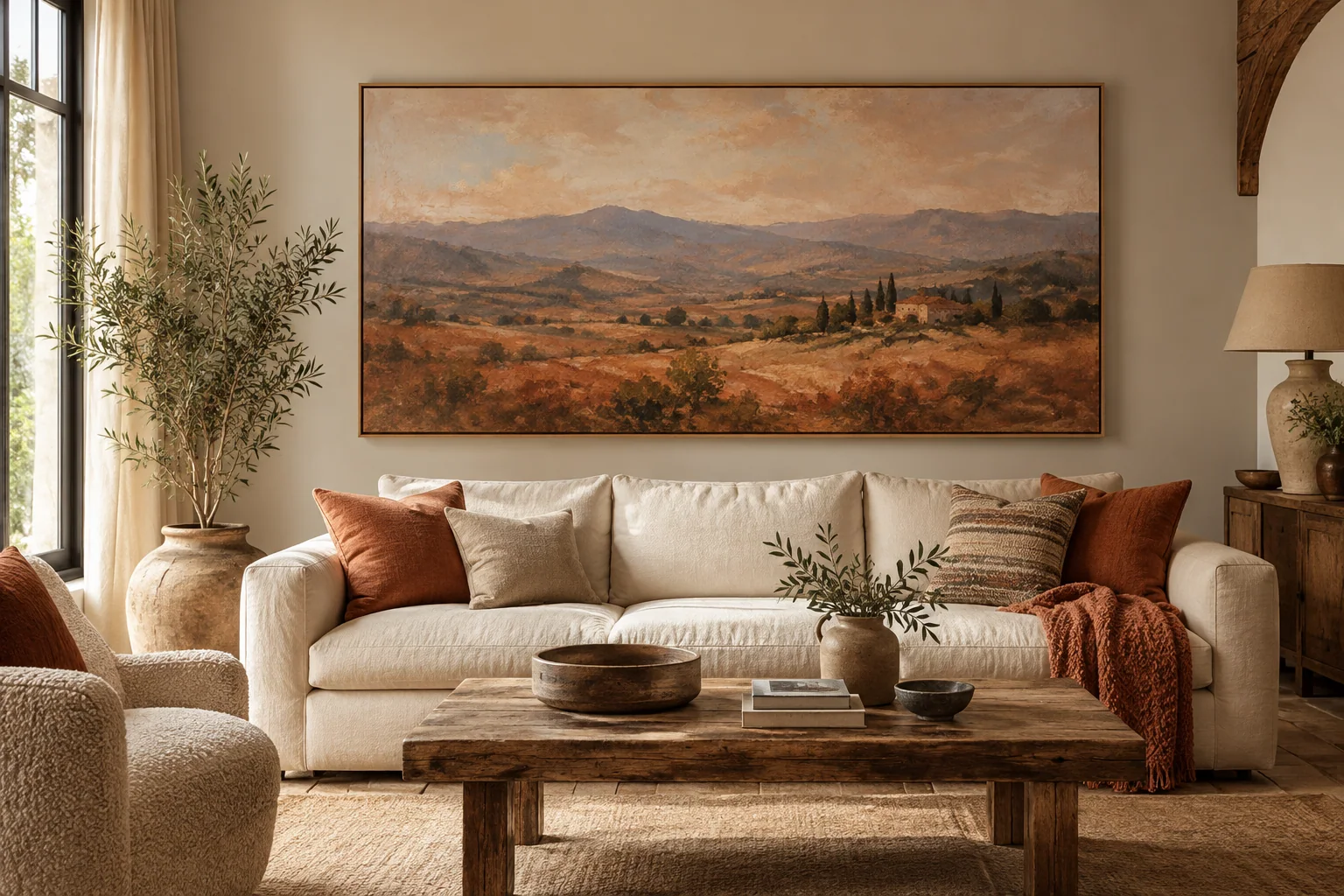
I can choose a beautiful painting and still make the room feel unfinished. A poor fit creates that gap. I test the artwork's size before ordering.
I choose artwork above a sofa by comparing its finished width with the furniture, checking wall clearance, and testing a full-size outline. I often begin around two-thirds to three-quarters of the sofa's width, then adjust for the room, composition, viewing distance, and frame.
I treat that proportion as a trial point, not a rule that every room must obey. I use four checks to turn a vague size choice into a clear artwork brief.
How do I measure the space that the artwork really occupies?
I can measure the canvas and forget the frame. The finished piece then feels crowded. I compare the outer dimensions with the usable wall before choosing a size.
I measure the sofa, the usable wall, nearby doors and lights, and the proposed artwork's finished outer dimensions. I include frame width and group spacing. I keep painted-area measurements separate from the full size that will sit on the wall.
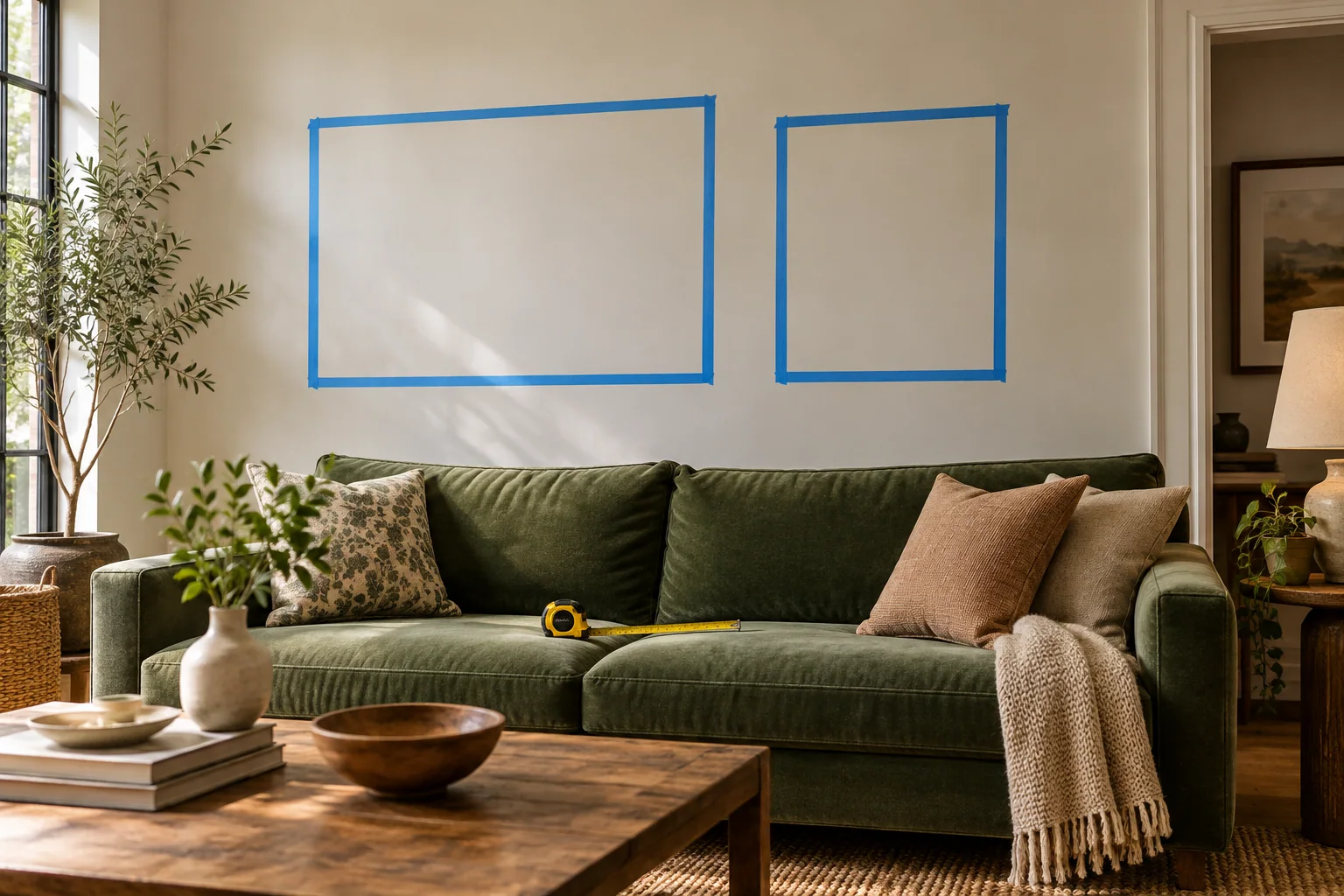
I start with the furniture anchor
I measure the sofa's full outside width rather than the seating area. I use that number because the artwork relates to the whole piece of furniture. I then measure the clear wall above it. I note lamps, vents, curtains, wall switches, and other features that can limit a painting's position.
I draw a simple wall view with those measurements. I do not need a detailed floor plan. I need enough information to see whether a proposed width fits the actual space. I include the sofa's back height because a high back changes the open area above it. I also check whether the room uses the sofa in more than one position.
I account for the supplied format
I ask whether the quoted dimensions describe the painted face, the stretched canvas, or the outside of a frame. I can lose useful clearance when I add a substantial outer frame. I can also misread a listing that presents a two-panel size as the size of each panel rather than the whole group.
| Measurement I take | What I record |
|---|---|
| Sofa width | I measure its outside edges. |
| Artwork width | I record the finished outer size. |
| Usable wall | I note nearby fittings and clearances. |
A Reddit buyer who used a sofa bed raised exactly this changing-layout problem.[1] I take that as a reminder to test the real room, not as a universal size formula. I can compare actual options in XM's large wall-art collection after I know the usable dimensions.
When does a proportion guide help, and when does it fail?
I can follow a familiar ratio and still dislike the result. A bold image carries weight differently. I compare the composition with the room before accepting the formula.
I use a width near two-thirds to three-quarters of the sofa as an initial test. I then check visual weight, wall shape, surrounding objects, and open space. A quiet landscape and a dense abstract can feel different at the same physical size.
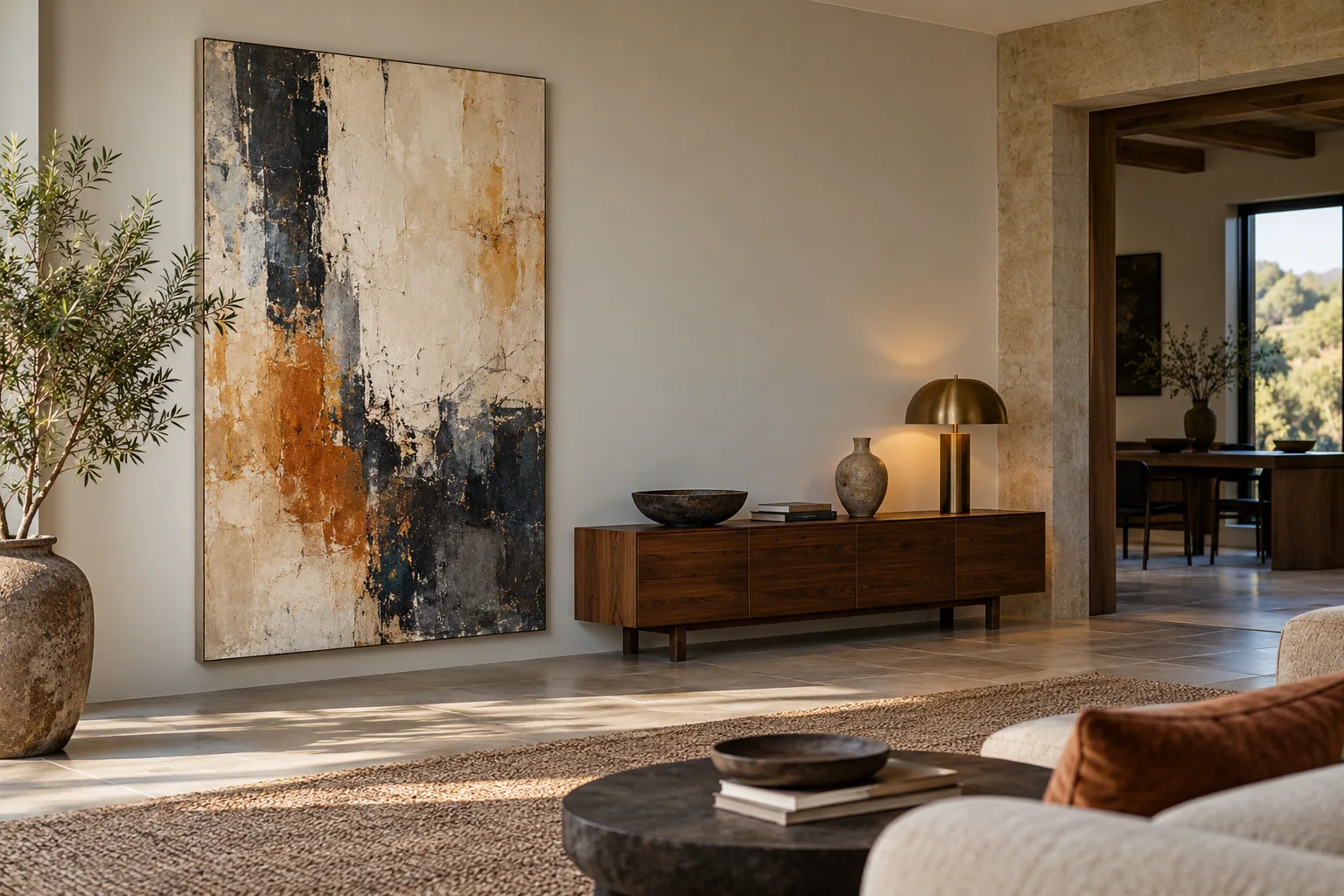
I judge visual weight as well as width
I look at the dark areas, contrast, texture, and empty space inside the painting. A dark, dense image can feel heavier than a pale work of the same size. A painting with a broad quiet edge may need more width before it feels connected to the sofa. I also look at the frame. A strong dark frame adds a boundary that can make the whole piece read more clearly.
I compare the artwork with the furniture's shape. A long low sofa can work well with a wide painting, but a nearby tall cabinet can change the balance. I look at the whole wall rather than checking the painting and sofa in isolation. I leave space for the artwork to stand apart from the furniture without drifting toward the ceiling.
I let the actual layout challenge the rule
I do not force a ratio when a window or a doorway makes it awkward. I can use a smaller painting with a nearby object, or a compact group with a clear center. I make that choice on purpose rather than spreading small works far apart to imitate a larger piece.
| Room condition I see | Adjustment I test |
|---|---|
| Long low sofa | I try a wider composition. |
| Tight wall clearance | I test a smaller framed outline. |
| Strong side furniture | I review the whole wall's balance. |
Large community discussions about artwork placement show that people can disagree even when they see the same room.[2] I use that disagreement to keep the rule flexible. I trust a full-size test more than a single ratio.
How do I plan a pair or a group of paintings?
I can order each panel correctly and still get the group wrong. Gaps change its overall span. I plan the group as one arrangement before choosing individual sizes.
I calculate group width from every panel's finished width plus the gaps between them. I test the full span above the sofa and choose a shared alignment. I confirm whether a quoted size means one panel or the complete set.
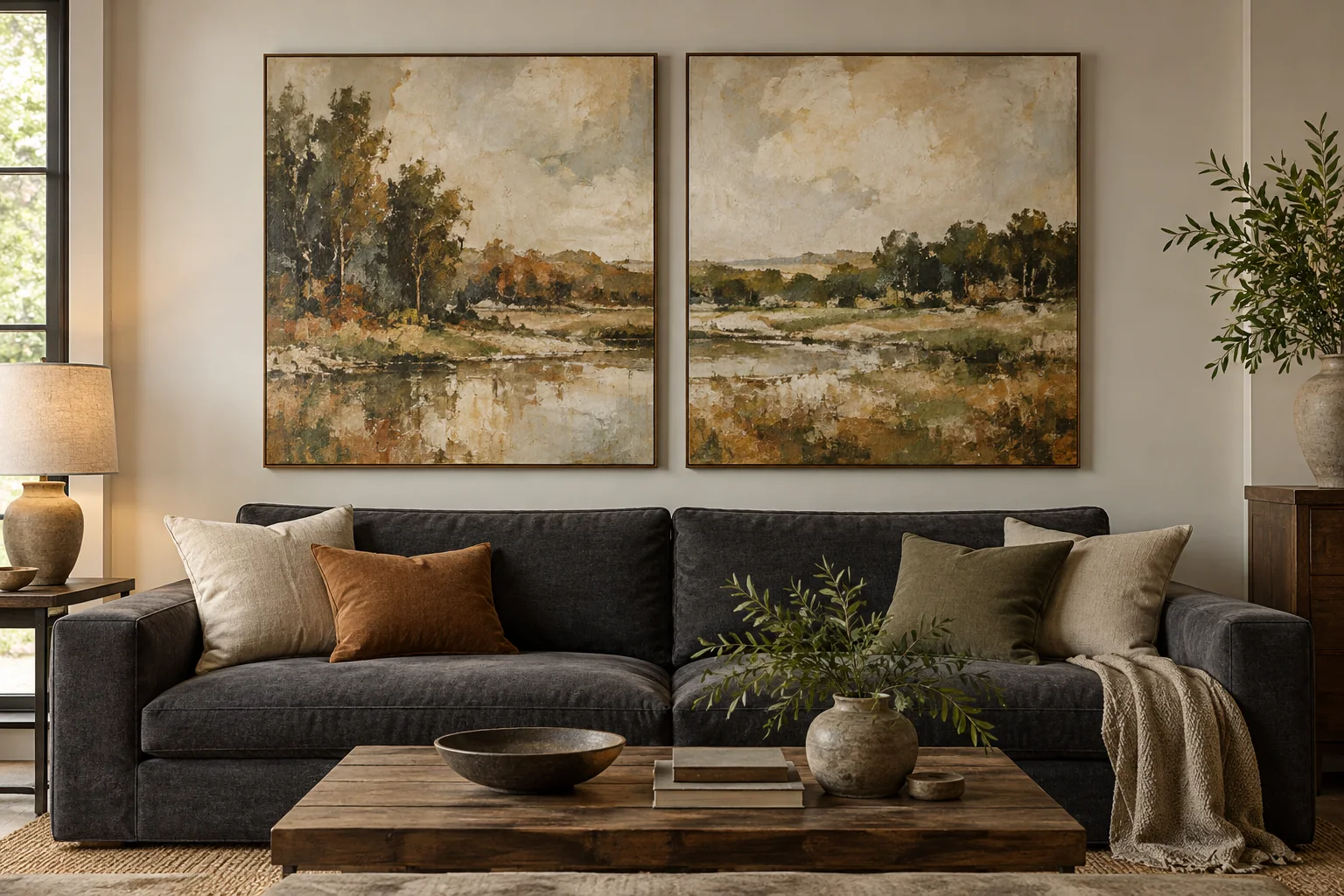
I calculate the complete span
I imagine a pair of framed works that each measures 55 centimeters wide. A gap of 6 centimeters gives the group a total span of 116 centimeters. I use this as a worked example, not as a recommended size for every sofa. I need the same calculation for three panels, even when the listing shows a single overall dimension.
I include frame width in that calculation. I also confirm the orientation of each piece and the order in which the images belong. A reversed pair can change the flow of a landscape or abstract design. I keep the selected arrangement with the order reference so the supplier understands the group I intend to hang.
I choose one clear alignment
I test a shared center line for mixed sizes, then compare it with a shared top or bottom line. I do not assume one arrangement always wins. I choose the line that makes the group feel connected and keeps the spacing easy to read. I check the arrangement from the doorway as well as from the sofa.
| Group detail I confirm | Why it matters to me |
|---|---|
| Each panel's size | I avoid a set-size misunderstanding. |
| Gap between panels | I calculate the full wall span. |
| Panel sequence | I preserve the intended composition. |
A recent sofa-art discussion focused on different frame sizes and shared alignment.[3] I use those questions in my own plan. I can browse XM's artwork references once I know the arrangement, but I still confirm the actual options for each selected design.
How do I test the size before I commit to a painting?
I can struggle to imagine a measurement on an empty wall. A small screen makes the problem worse. I use a full-size outline to make the choice visible.
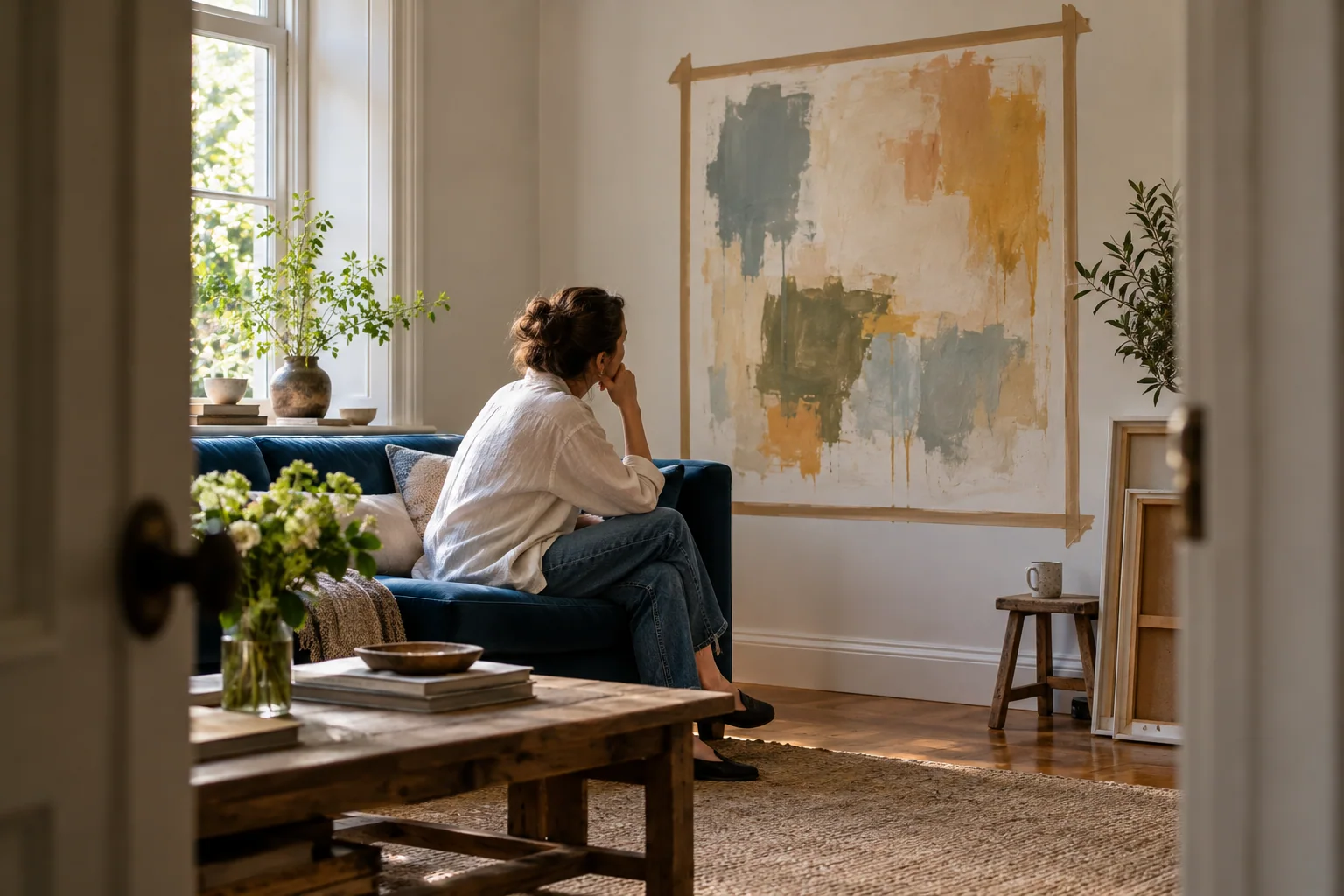
I mark the proposed outer dimensions with removable tape or a paper template, then view the outline from the sofa, doorway, and main walking route. I test the hanging height and lighting. I photograph the trial with the furniture visible before sending my brief.
I use a simple physical test
I choose tape that suits the wall finish and test it in a hidden spot first. I can use a paper template when tape is unsuitable. I mark the full outer rectangle rather than only the painted area. I include the expected gap for a pair and a rough frame boundary when the frame is visually strong.
I live with the outline long enough to see the room in daylight and evening light. I sit where I normally sit. I also stand where a visitor first sees the wall. I check whether the work would feel too high, too close to a lamp, or too small beside nearby furniture. I move the outline before I move an order into production.
I send evidence that helps the supplier
I take one straight photograph and one wider room view. I include the sofa width, the proposed finished artwork size, and any important clearance. I state whether I want one piece or a group. I describe the room's mood in plain words, such as calm, bright, or warm, rather than asking the supplier to guess from a close crop.
| Test I make | Question I answer |
|---|---|
| Seated view | I check comfort and connection. |
| Doorway view | I check first impact and balance. |
| Evening view | I check shadows and nearby lighting. |
I use the outline to narrow the size range, then ask for a design that fits it. I leave room for the supplier to explain crop changes or finish limits. I keep the final size tied to the approved composition so a larger canvas does not quietly become a different picture.
Conclusion
I choose artwork size with measurements, a complete group plan, and a full-size wall test. I let the room refine the ratio before I order.