How Can I Source Hotel Artwork with Consistent Quality Across Rooms?
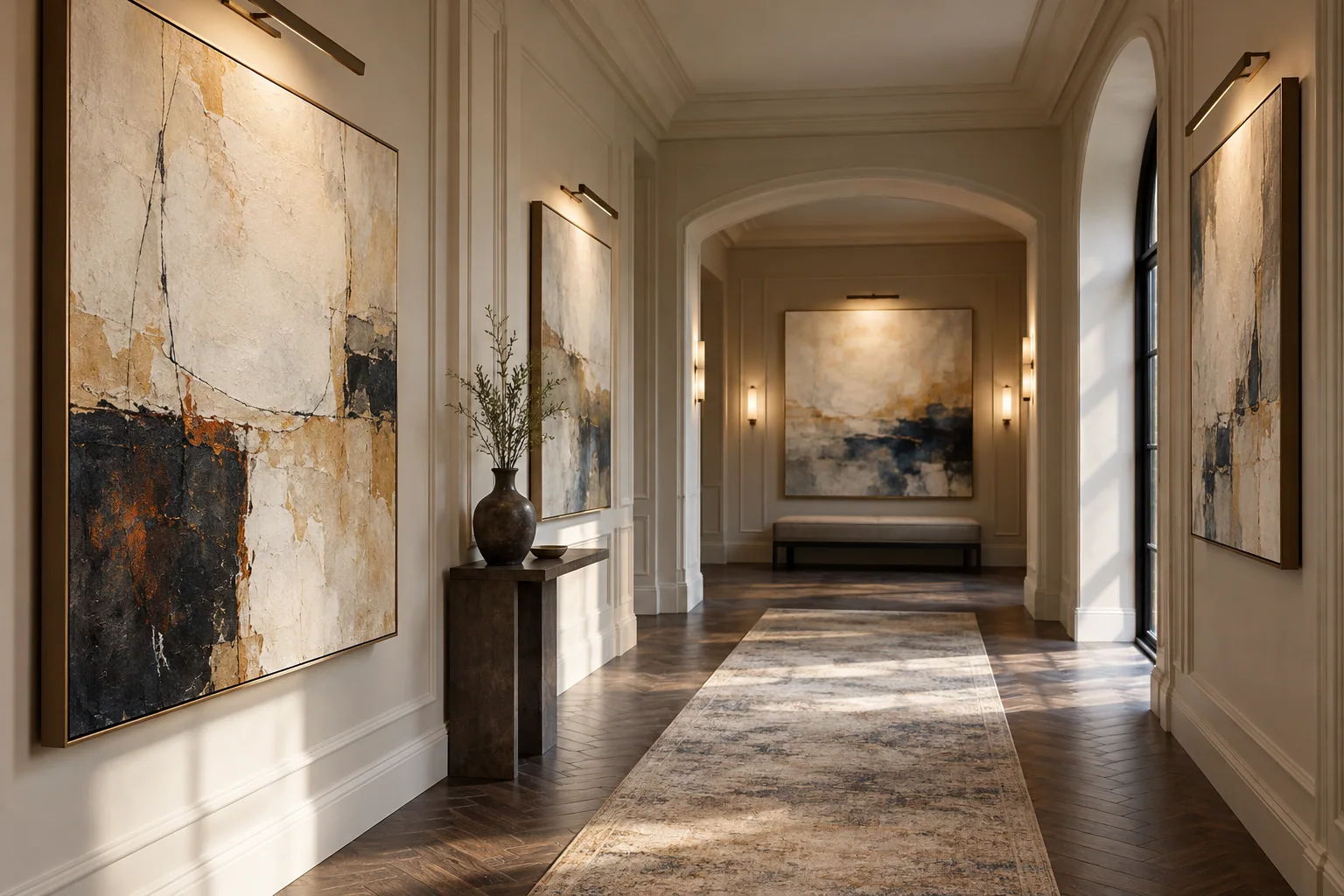
I can select one beautiful painting and still struggle to build a coherent hotel range. Different rooms expose inconsistencies. I plan the collection and approval standard together.
I source hotel artwork by mapping room types, defining a shared visual direction, approving relevant samples, and recording each work's size, finish, quantity, and location. I agree on the range of handmade variation and connect inspection, packing, and phased delivery to the same project record.
I do not try to make handmade paintings behave like identical printed panels. I define the points that must stay consistent and the marks that can remain individual.
How do I turn room plans into a clear artwork brief?
I can give a supplier a list of wall sizes and expect a collection. That leaves the guest experience undefined. I connect the artwork to each room's role.
I group the spaces by room type and viewing conditions, then record wall size, furniture, lighting, palette, quantity, and location. I describe the desired mood and identify the main approval contact. I use that brief to build a focused shortlist instead of choosing unrelated works one room at a time.

I define the spaces before I define the paintings
I separate guest rooms, corridors, reception, meeting areas, and other shared spaces. I ask what the artwork should do in each place. A quiet guest-room piece can support rest, while a reception work may need a clear presence from the entrance. I do not use one dramatic reference as the whole plan for every wall.
I record the useful physical details. I include finished wall clearance, furniture positions, lighting, and any access limits. I ask the project team to identify surfaces or mounting conditions that need an installer's review. I also note whether the artwork will be seen close up, across a room, or mainly during movement.
I choose a shared direction with room-level flexibility
I use a small set of palette and subject rules to connect the collection. I can keep related colors while changing scale or composition across room types. I do not need every piece to be a copy of the same image. I want the range to feel planned and the individual works to remain suitable for their locations.
| Brief item I record | Decision it supports |
|---|---|
| Room type and location | I define the artwork's role. |
| Wall and lighting | I choose scale and surface. |
| Palette and quantity | I build a coherent shortlist. |
I use XM's hospitality artwork service to connect that brief with the available collection and project review. I confirm the actual scope with the project desk instead of assuming that curation, installation, or every finishing task is automatically included.
What should a sample prove before I approve a larger order?
I can approve a small color sample and expect it to prove the whole range. It cannot answer every question. I choose samples around the project's main risks.
I use a sample to assess the relevant surface, palette, finish, and construction, then check the composition at the intended scale through an agreed reference. I record what the sample represents and which choices remain open. I confirm sample cost, timing, and approval scope before production.
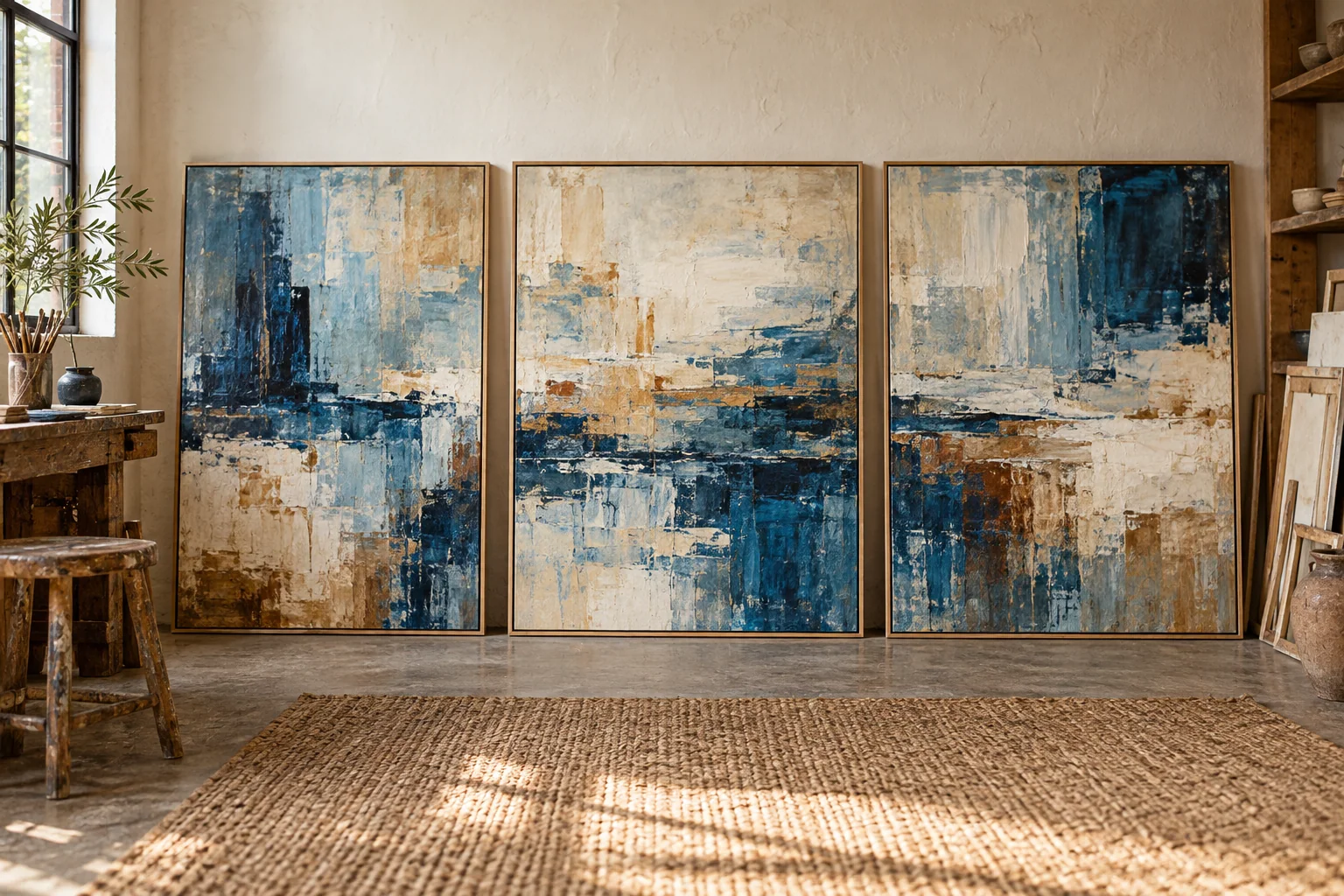
I make the sample's purpose explicit
I identify the decision that would be most costly to get wrong. The project may depend on a quiet neutral ground, a visible textured surface, or a frame profile that fits a recess. I ask for a sample that addresses that issue. I do not request a sample only because a procurement checklist includes the word sample.
I also identify the limits of the sample. A small painted panel can help with material and palette, but it cannot prove the balance of a large composition. A frame corner can show a profile, but it cannot prove how a large assembled frame will fit. I pair the sample with the relevant artwork and size records.
I turn approval into a shared record
I label the approved reference in the project documents and record the date and approving contact. I keep the selected material, finish, and any accepted differences beside it. I want the artist, finishing partner, and purchasing team to refer to the same record rather than different images buried in separate messages.
| Sample or reference I use | Question I answer |
|---|---|
| Painted sample | I check the specified surface and palette. |
| Frame example | I check the selected profile and finish. |
| Full composition reference | I check the intended image and crop. |
CCI's condition-reporting guidance shows the value of clear visual and written records for paintings.[1] I apply that record-keeping principle to approval without claiming a museum certification for the project. I ask XM's quality-control service how the approved reference will be used for the selected order.
How do I define acceptable variation in handmade work?
I can ask for consistency and receive either vague reassurance or unrealistic promises. Neither helps the team review the order. I define consistency around the agreed design.
I keep dimensions, layout, dominant palette, finish, and selected visual priorities consistent while allowing agreed variation in individual painted marks. I identify unacceptable changes before production. I review a relevant group or benchmark when the project depends on several pieces reading together.
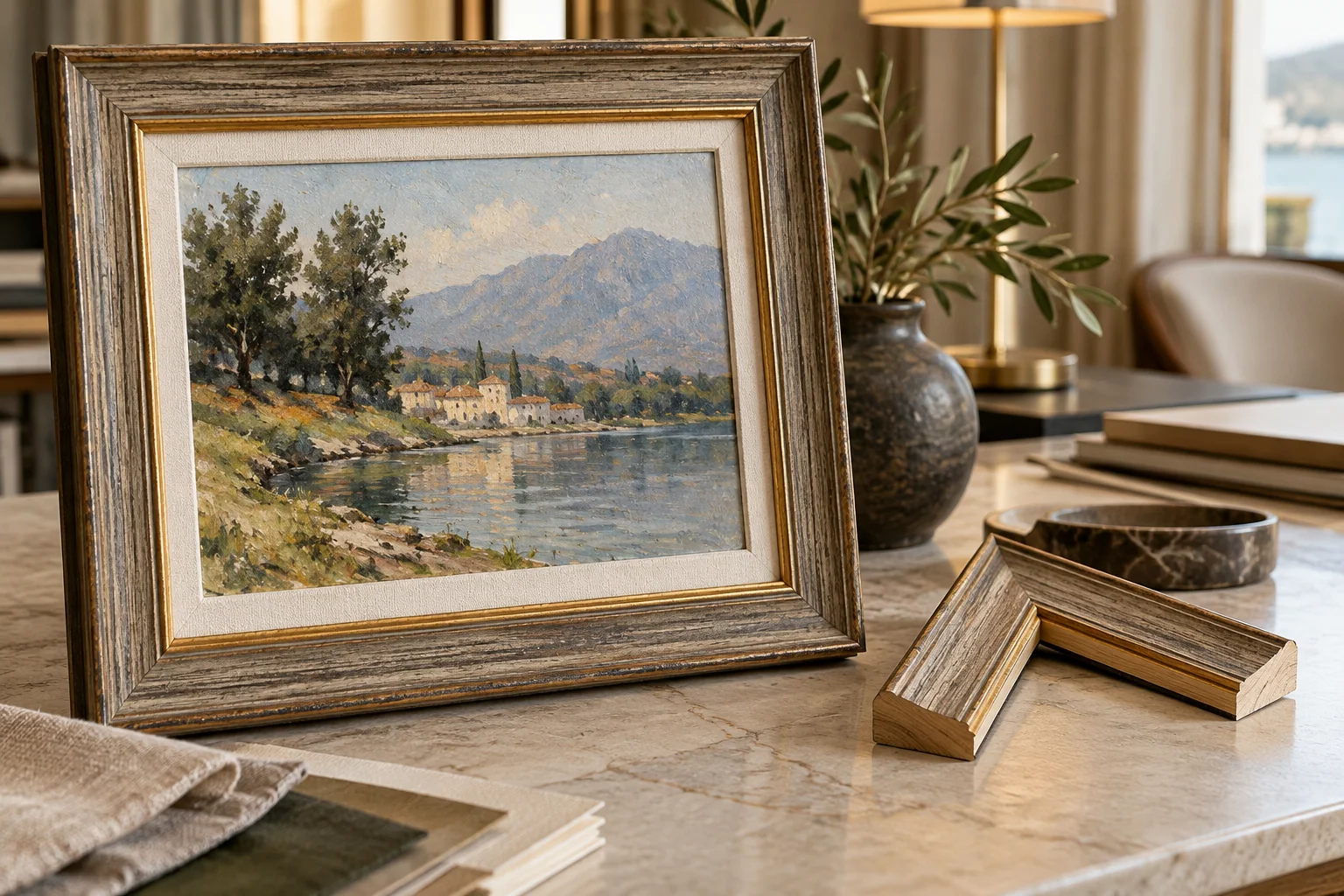
I separate fixed choices from individual marks
I list the points that must match the approved specification. Those points might include outer dimensions, frame profile, dominant color family, and the placement of a major visual form. I then describe where natural brushwork variation can remain. I do not turn handmade into permission for an unrelated crop, missing feature, or different finish.
I choose words that the team can use during inspection. I can describe a pale ground with a limited dark accent, a broad horizon, or raised marks concentrated in one area. I avoid a vague instruction to make every work premium. I need a standard that relates to the approved image rather than a marketing adjective.
I review the group when the group matters
I ask for a useful group view when several works will hang together. I want to see whether the dominant values and palette still feel connected. I do not rely only on individual close-ups because each one can look attractive while the group loses balance. I also confirm each panel's place in the room schedule.
| Choice I hold consistent | Variation I discuss |
|---|---|
| Finished dimensions | I allow no unagreed size change. |
| Main palette | I review individual mark differences. |
| Frame specification | I confirm the selected finish. |
A wholesale-art discussion on Reddit raises questions about repeat orders and the practical limits of production.[2] I use those concerns to define the brief more clearly. I do not treat a community pricing discussion as evidence of XM capacity, project margins, or a guaranteed batch outcome.
How do I connect production with packing, installation, and later orders?
I can finish the artwork schedule and lose track of where each piece belongs. Delivery then becomes a sorting problem. I keep room references attached to the order record.
I connect each artwork reference with location, finished size, frame, quantity, packing label, and delivery phase. I confirm who installs the work and how concerns are reported. I retain approved references for later orders, while asking the supplier to review new timing, materials, and variation rather than assuming exact replication.
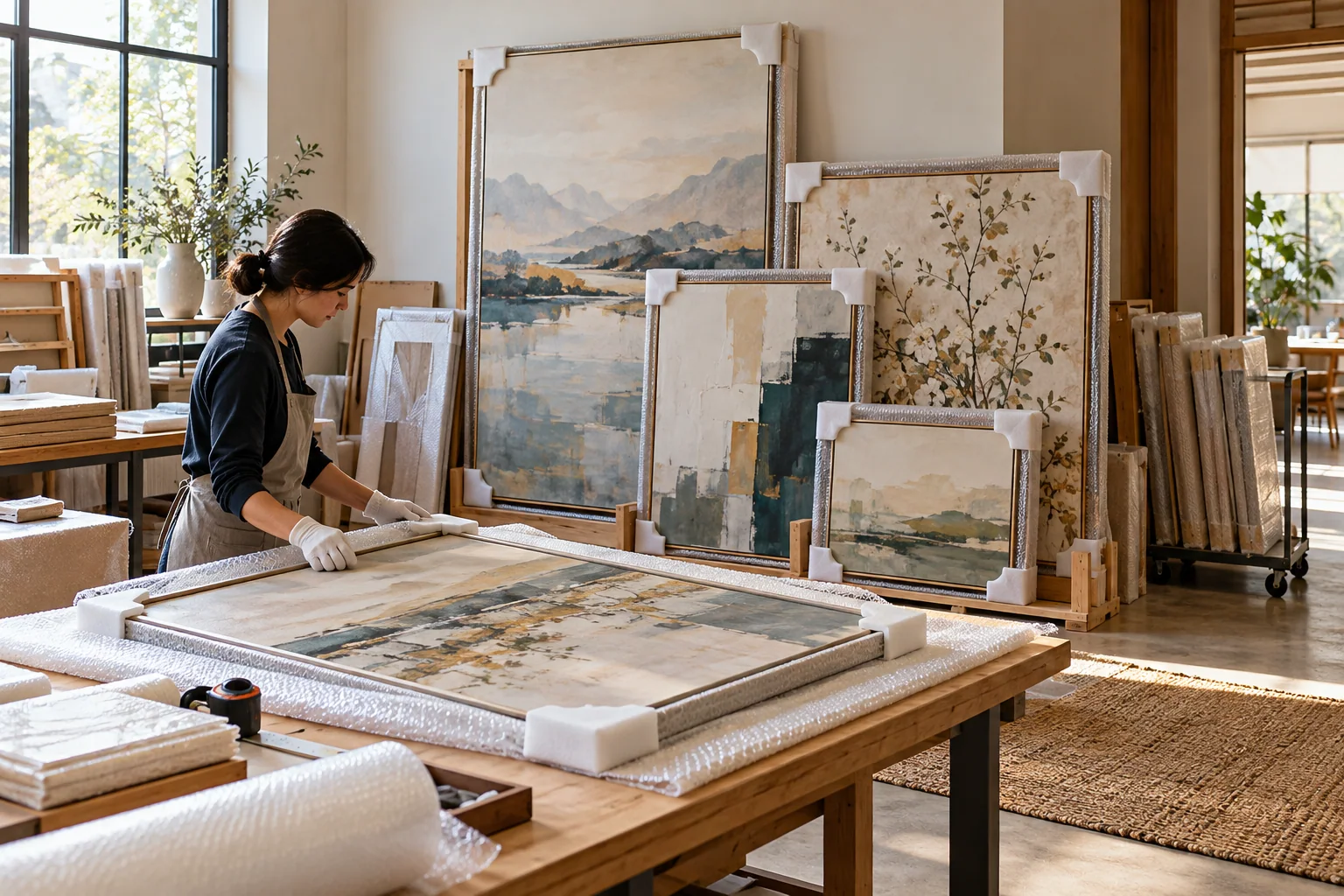
I plan the receiving team's work
I ask how the shipment will identify each work and its destination. I can use a room code or project location reference without putting guest information on the package. I want the receiving team to match the work with the approved schedule before installation. I include phased delivery requirements early so packing and dispatch do not become an afterthought.
I also confirm the arrival and installation sequence. I ask who provides hardware, who assesses the wall, and whether local preparation remains necessary. I do not assume that export coordination includes on-site installation. I want the quote to separate those responsibilities and identify the contact for an arrival concern.
I keep future buying clear
I retain the approved design and specification for repeat orders. I understand that a handmade work can be reviewed against the same standard without becoming an identical industrial repeat. I ask the supplier to review any material, size, finish, or timing change before a new order begins.
| Handover record I keep | Team task it supports |
|---|---|
| Room and artwork references | I support sorting and installation. |
| Finish and condition records | I support arrival inspection. |
| Approved design record | I support a future order review. |
I also confirm image-use and reproduction permissions when the project plans marketing photographs or adapted designs. Copyright guidance explains why visual works can carry separate rights.[3] I ask for the relevant terms rather than assuming that a physical purchase answers every use question. I keep those terms with the project brief and final order record.
Conclusion
I build hotel artwork consistency with a room brief, useful samples, and a clear variation standard. I connect every approved work to delivery, installation, and future-order records.