What privacy questions should I ask before uploading portrait photos?
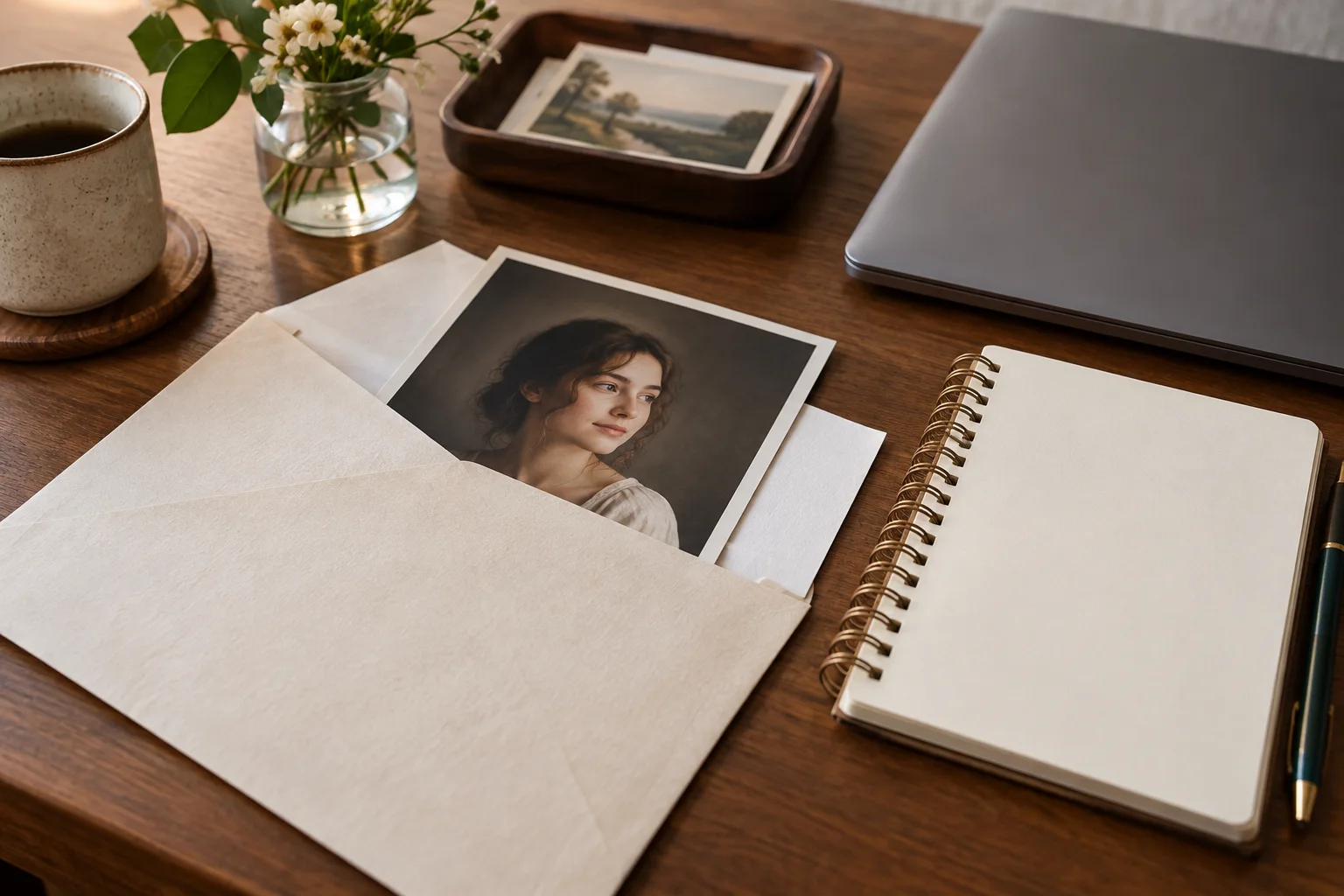
I want a meaningful portrait, but my reference photos may reveal private family details. An unclear upload process can make a simple commission feel risky.
I ask who can access my photos, how they will be used, where they are stored, and how deletion works. I also ask separately about public portfolio use. I share only the references needed for the painting and confirm permissions before uploading.
I separate the artwork brief from the permission questions. That helps me choose useful references without treating every photo in my album as part of the order.
What information does the artist actually need?
I can upload an entire album to explain one face. That extra material may expose people and places that have no role in the painting.
I choose one main composition reference and a small set of supporting detail photos. I remove unrelated material from the upload. I explain which picture controls the pose and which pictures only clarify features, colors or clothing.
I reduce the reference set before sharing
I begin with the painting rather than the folder on my phone. I identify the chosen subject, intended pose and important details. I then select the smallest set of photos that explains those decisions. A clear main reference can establish the head angle. A second image can show an eye color or a clothing detail that the main photo hides. I label each file by its purpose so the artist does not have to guess which version I prefer.
I inspect the background of every image. I may find a visible school name, house number, document or person who will not appear in the painting. I consider cropping that material from a working copy. I keep the original privately because a crop can remove useful composition information. I do not assume that cropping also removes every hidden piece of file information. I ask about the accepted file format and upload route before making changes that could reduce image quality.
I use the photo painting section to review the intended composition, but I distinguish a preview from a privacy policy. A photo-based illustration can help me choose a crop without explaining storage or access. I write those questions separately. If several relatives appear in the reference, I discuss the proposed use with them where appropriate. I avoid uploading sensitive photos merely because a large batch seems more helpful.
| Decision | My check |
|---|---|
| Main reference | I label the chosen pose |
| Supporting image | I name the missing detail |
| Unrelated background | I crop a working copy |
Who can see the uploaded files and for what purpose?
I may expect a private commission while the supplier expects a future portfolio image. Those different expectations can become uncomfortable after the painting is finished.
I ask which people or service providers can access the files and whether access is limited to producing my order. I ask for a separate explanation of public sharing, marketing and portfolio use. I do not infer consent from a checkout button.
I distinguish order access from publicity
I ask a direct question about the working process. I want to know whether the artist receives the reference personally, whether a production team helps, and whether another service handles uploads or communication. I do not need a staff biography to make that request. I need a clear account of who can see the images and why. If the response only describes payment security, I ask again about the photograph itself.
I treat permission to create a painting and permission to publish it as separate choices. A private family image may be suitable for an artwork but unsuitable for an open gallery or social account. I ask whether the original reference, the completed painting or a comparison image could appear publicly. I also ask whether I can decline that use without changing the agreed artwork scope. I keep the answer in writing rather than relying on an informal assumption.
I check rights in the source photograph as well. Being the person shown in a picture does not automatically answer who owns its copyright. The US Copyright Office explains the role of photographers and ownership.[1] I use that source to identify a permission question, not to give myself legal clearance. A family memorial request can involve several separate images and contributors.[2] I therefore record who supplied each image and any limits they stated. I bring unresolved questions to the supplier before the custom artwork brief becomes a production instruction.
| Decision | My check |
|---|---|
| Production access | I ask who needs the files |
| Public portfolio | I request a separate choice |
| Photographer ownership | I check permission for the intended use |
What should I ask about storage and deletion?
I can approve a painting and forget the original files remain somewhere. A vague promise to keep photos safe does not explain how long they stay.
I ask about retention periods, deletion requests, backups and any files kept for order records. I ask what the supplier can confirm after deletion. I avoid assuming that removing an upload from my screen removes every stored copy.
I ask for a practical retention explanation
I ask when the supplier no longer needs the full reference set. The answer may depend on production, delivery questions or a later agreed alteration. I request the actual retention practice rather than suggesting a deadline that the supplier has never accepted. I also ask whether an order record can be retained without keeping every original photo. Those are different types of information, and I want the explanation to distinguish them.
I ask how to request deletion and which address or order reference I should use. I want to know whether the request covers the upload system, working copies and any third-party service involved in the order. I also ask how backups are handled. I do not expect an instant claim that every copy everywhere disappears at once. I expect a clear statement of the process and its limits. If the supplier cannot explain those limits, I can choose a less sensitive reference or pause the upload.
I save the response alongside the selected files and the approved composition. That record helps me avoid sending a fresh copy through a different channel after asking for deletion elsewhere. I also keep my own private archive of the photo and artwork instructions. The finished painting will need its own care information, which is separate from digital file retention.[3] I do not use a storage answer as evidence of paint quality or delivery reliability. I assess each part of the order with the question that actually applies to it.
| Decision | My check |
|---|---|
| Retention period | I ask when files stop being needed |
| Deletion request | I save the contact route |
| Backup copies | I ask what limits remain |
How do I keep the approval conversation private?
I can protect the first upload and later send sensitive references through several casual messages. That scattered conversation can undo the clarity of my original request.
I use the agreed communication route, reference the order clearly, and share only the files needed for each decision. I avoid public comments for private corrections. I keep a single record of permissions, approved references and any changed sharing choices.
I connect each message to a specific decision
I choose a clear subject line or order reference for the approval conversation. I keep the main reference and supporting files named consistently. If I send a replacement photo, I explain whether it replaces the old pose or only clarifies one detail. That instruction matters because a new image can otherwise become an accidental change to the whole painting. I ask the supplier to acknowledge any important replacement before I judge the next preview.
I avoid placing private correction details in public reviews, gallery comments or social messages that other people can read. I use the communication route the supplier has confirmed for order work. I do not assume that every channel has the same handling practices. If the artist requests a new service or file link, I ask why it is needed and who receives access. I also check that a shared folder does not expose unrelated album content.
I keep a simple private record of the permissions and the composition approval. I note any agreed limits on public use and any later changes. If a relative changes their view about a reference, I raise that issue before treating the old permission as permanent. I do not promise that one checklist solves every privacy concern. I use it to make the exchange specific enough for a real answer. That approach lets me focus on the portrait while keeping the photo decisions visible throughout the commission.
| Decision | My check |
|---|---|
| Replacement photo | I state which decision changes |
| Private correction | I use the agreed order channel |
| Permission change | I record and communicate it |
Conclusion
I share useful references with clear permissions. I ask about access, retention and portfolio use before uploading, and keep the answers with my painting brief.