How do I choose the right photo crop for a painted portrait?
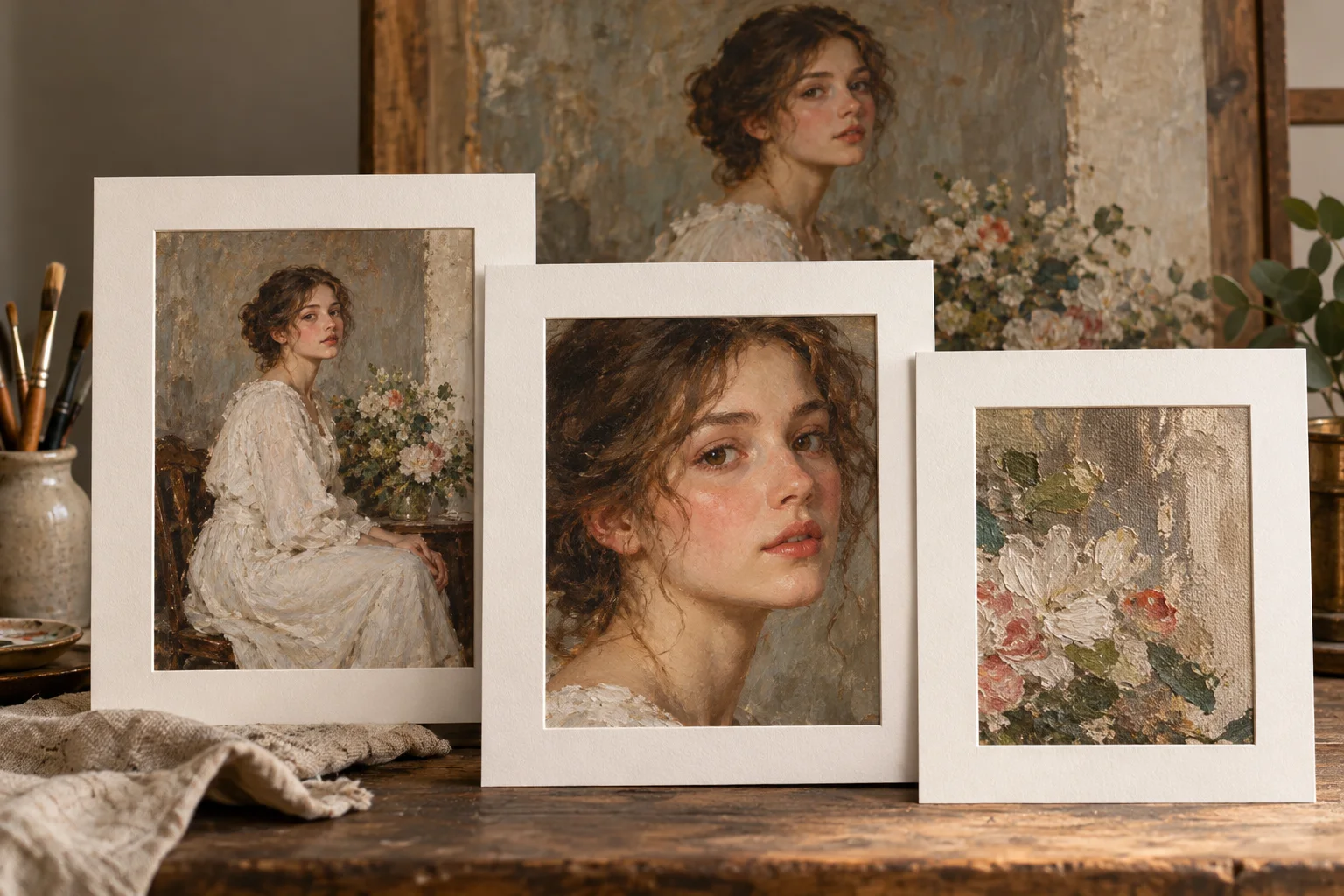
I can make a portrait fit a canvas by cropping away its edges. That quick fix may remove the hands or space that make the pose feel natural.
I choose a portrait crop by comparing the photo’s proportions with the intended canvas, protecting important gestures, and leaving space for the selected framing route. I test full-image and closer versions before approving one composition as the painting reference.
I use the crop to decide what the viewer should notice first. I can make that decision clearer by checking the face, body, edges and wall together.
How does the canvas ratio change the photograph?
I may see a size label and overlook its shape. Two canvases with similar area can preserve very different parts of the same portrait.
I compare width divided by height for the photo and the canvas. I decide whether to crop, extend the background or change the canvas shape. I review the actual visible image rather than assuming every standard size keeps the whole photograph.
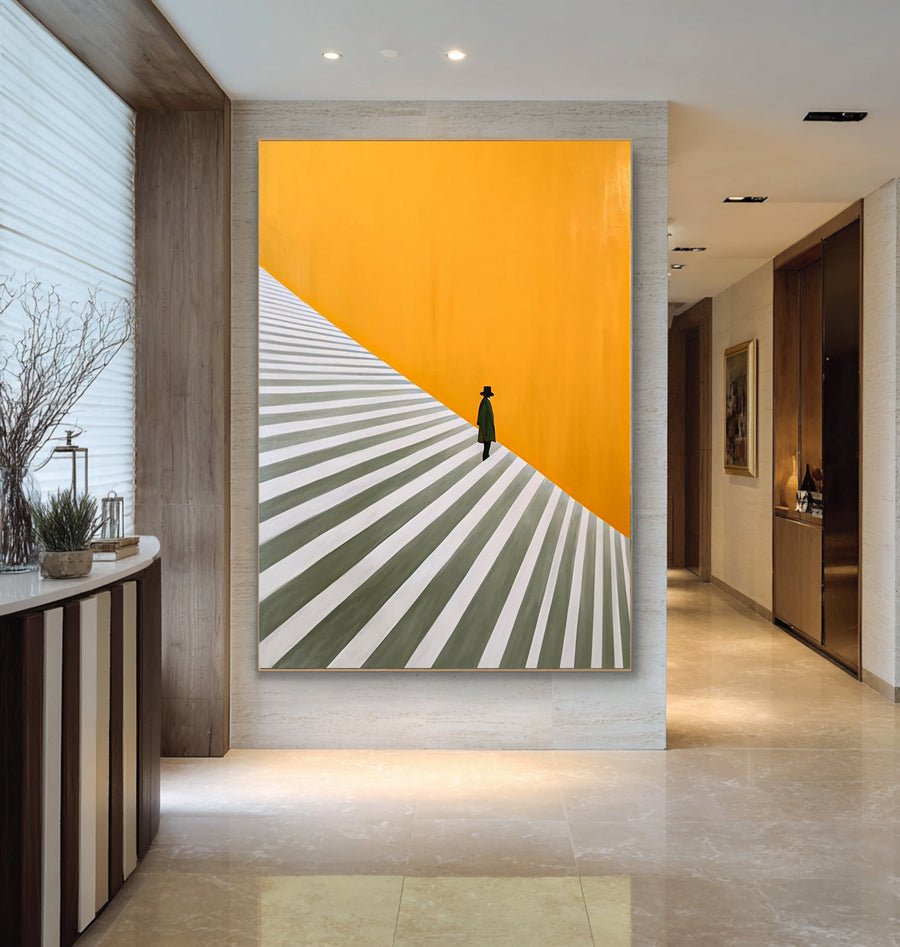
I compare shapes before dimensions
I start with the source image’s shape. A phone portrait may be tall and narrow, while a selected canvas may be closer to square. If I fit the full image into that canvas, I can gain empty space at the sides. If I fill the canvas instead, I can lose space at the top and bottom. I ask which route the preview uses before I judge the result.
I make two versions with the same face size. One preserves the full photograph. The other fills the proposed canvas. I compare what changes at the edges. I may lose a hand, a pet’s ear or the top of a hairstyle. I do not treat those losses as minor because they sit outside the face. They can change posture and the balance of the image. I also check whether the crop leaves the subject pushed against one side.
I use simple ratio calculations only as a planning tool. For example, a two-to-three rectangle and a three-to-four rectangle differ in shape even if both are sold as portrait formats. I do not need to memorize ratios to notice that difference. I need to review the image inside the exact selected rectangle. I can use the photo composition preview for that comparison, while remembering that it illustrates placement and framing rather than final oil-painting brushwork.
| Decision | My check |
|---|---|
| Tall source, wider canvas | I compare full-image and crop views |
| Important detail at an edge | I protect it before filling the canvas |
| Unclear preview mode | I ask whether it fits or crops |
Which facial and body details should stay inside the crop?
I can keep the whole face and still make a pose feel cramped. A crop through a joint or a meaningful gesture can look accidental.
I protect the face, head shape and important gestures first. I compare where the crop crosses shoulders, hands and clothing. I leave enough space to support the pose and ask the artist to review awkward edges before I approve the reference.
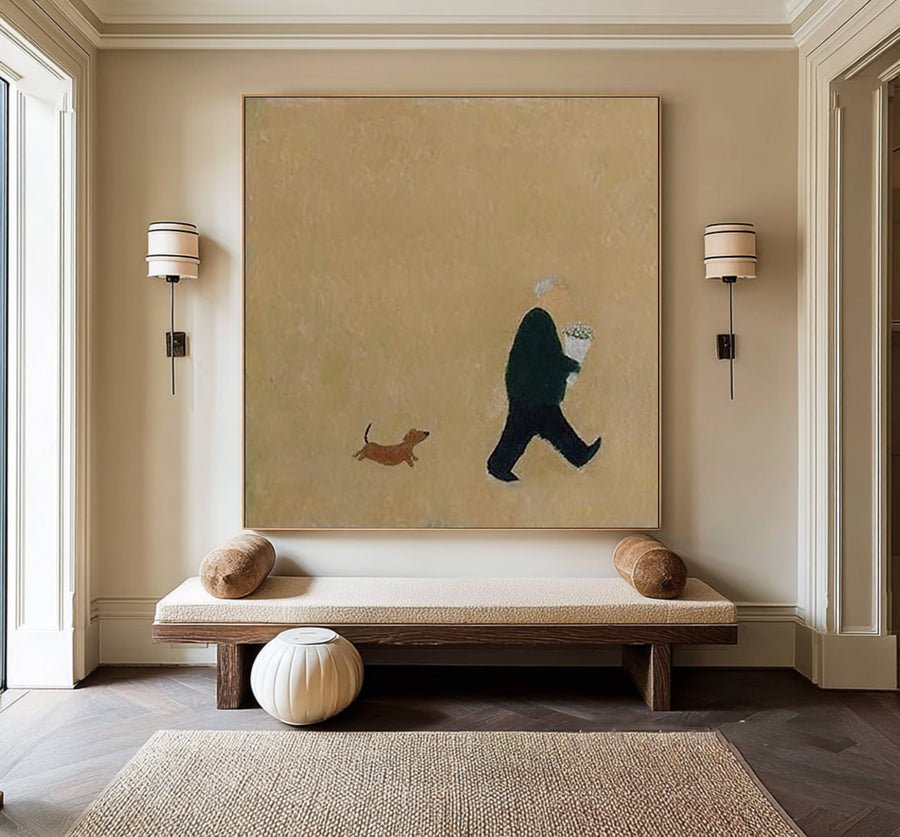
I inspect the body around the face
I look beyond the eyes and mouth. I check the space above the head and the outline of the shoulders. I ask whether the selected crop gives the person a clear place inside the painting. A tight face crop can be intentional, but it should read as a choice rather than an image that barely fits. I compare it with a slightly wider version before deciding which feels more natural.
I inspect hands and other gestures. A hand on a shoulder can explain a relationship in a family portrait. A pet leaning against a person can give the scene its meaning. I mark those details in the brief so they are not removed simply to fill a rectangle. I also check clothing that helps identify the occasion. A small part of a wedding dress or uniform may matter more than a large area of background.
I review where the crop crosses the body. I do not use a universal rule that every joint must be visible. I judge whether the resulting pose looks clear and balanced. If I request a change in pose, I provide supporting evidence rather than assuming the artist can reconstruct hidden anatomy from one image. I preserve the untouched photo beside the approved crop. I also check permission for the intended use when someone else owns the photograph.[2] I keep each requested change in the custom artwork brief so the crop and the quote remain connected.
| Decision | My check |
|---|---|
| Meaningful hand gesture | I keep it visible |
| Very tight head crop | I compare a wider version |
| New pose requested | I provide supporting references |
How do stretching and framing affect the visible edge?
I can approve a digital crop and forget that the physical canvas has edges. The finished assembly may show less of the image than I expect.
I ask which dimensions describe the visible face, stretched canvas and outer frame. I confirm edge treatment and any required margin before approval. I keep key features away from an uncertain boundary and review the selected assembly with the supplier or framer.
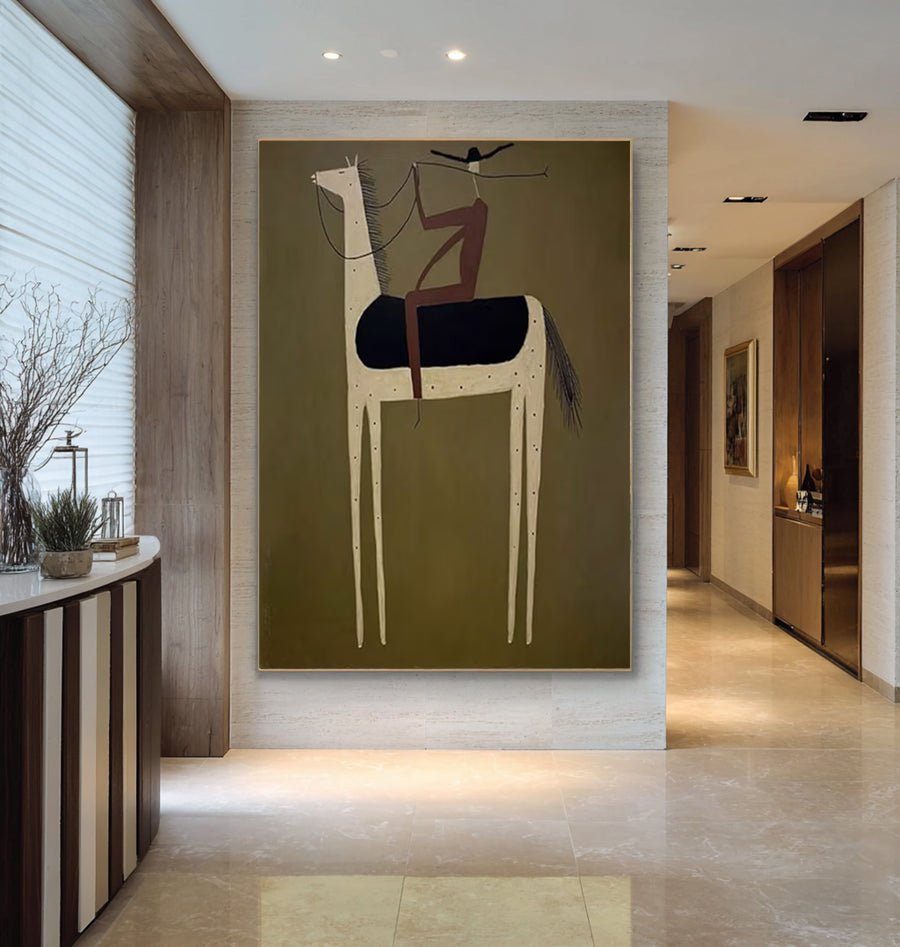
I distinguish the image face from the finished object
I ask what happens to the painted canvas at its edges. A stretched canvas has a physical depth, and the selected edge treatment can influence how the image reaches the sides. An outer frame can also overlap or surround the visible face in different ways. I do not assume that a digital rectangle describes every part of the final object. I ask for a clear explanation tied to the chosen format.
I record three measurements when they apply. I note the intended visible image area, the stretched canvas dimensions and the finished outer frame dimensions. These measurements answer different questions. The visible area affects the crop. The support dimensions affect assembly. The outer size affects the wall. Framing guidance explains why fit and support matter to the painting’s protection as well as appearance.[1] I use that background to ask a practical question about the actual work, not to design an assembly myself.
I keep important facial details and gestures away from an edge that has not been confirmed. If I choose rolled canvas, I ask what margin the local framer needs before painting begins. I do not wait until arrival to discover that the planned visible image cannot be stretched as expected. I share the reference and proposed dimensions with the framer when needed. I then save the approved crop with its intended visible area, rather than keeping an unlabeled screenshot that leaves later handling decisions open to interpretation.
| Decision | My check |
|---|---|
| Rolled canvas | I confirm required margins with the framer |
| Outer frame selected | I ask for finished outside dimensions |
| Face near an uncertain edge | I adjust the crop before approval |
How do I review the crop at a real display size?
I can enlarge a preview on screen until every feature looks clear. That view can hide how small the face will feel on the finished wall.
I test the finished outline on the wall and compare the face size from normal viewing distance. I review more than one crop at the same canvas size. I choose the version that supports the portrait’s purpose without relying on screen enlargement.
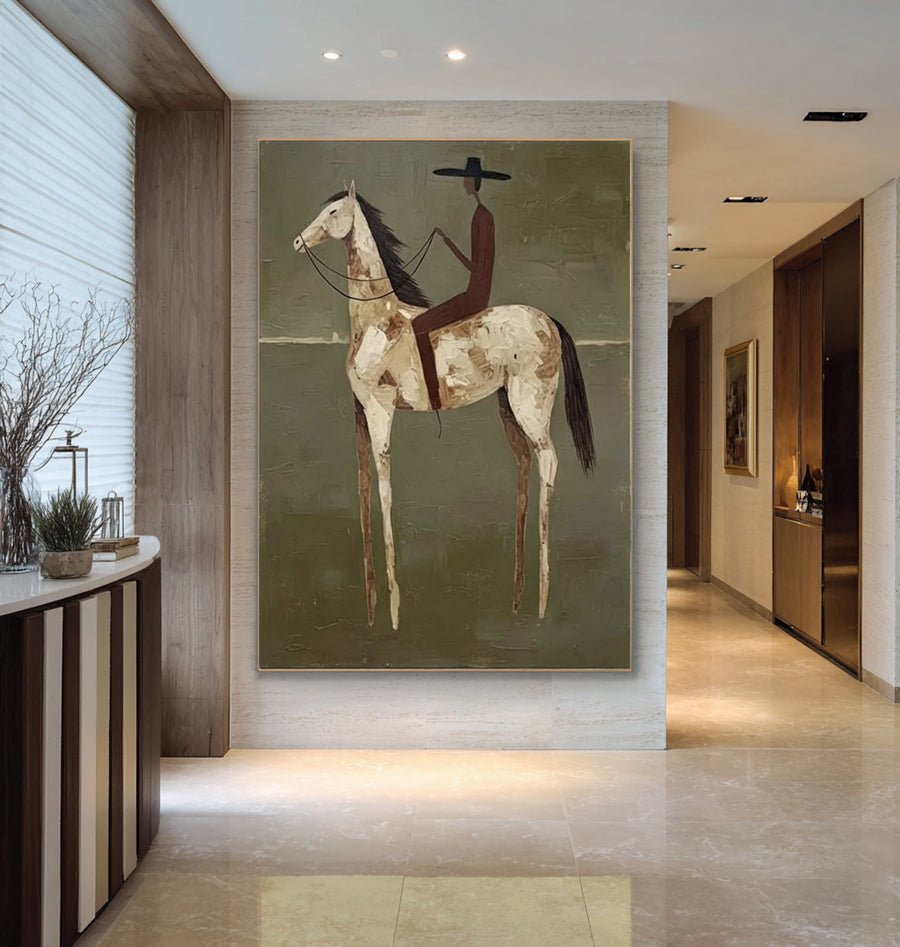
I test the viewer’s real position
I mark the intended outer dimensions with paper or removable tape where appropriate. I include the frame and avoid a wall surface that could be damaged by the test. I stand where the painting will usually be seen. I compare the outline with nearby furniture, doors and lighting. I do not judge the portrait only while standing a few inches from the wall.
I estimate how much of the canvas the face occupies. A full body portrait on a modest canvas can have a much smaller face than a close head portrait on the same size. I compare those layouts before assuming that increasing the canvas is the only solution. A tighter crop may preserve the intended expression more effectively, while a wider scene may better explain a relationship or setting. I decide which purpose matters more.
I save the selected crop with the canvas size and orientation. I record any agreed background extension or edge treatment. I also check that the preview has not stretched the photograph in a way that changes facial proportions. I can ask for a corrected composition review if the shape looks wrong. After arrival, I use the material and care information supplied for the work and choose a stable indoor location.[3] I let the crop solve a visual decision before production, rather than expecting framing or a different wall position to rescue an unclear composition afterward.
| Decision | My check |
|---|---|
| Small face in a wide scene | I compare a closer crop |
| Preview distorts proportions | I request a corrected view |
| Crop approved | I save size, orientation and edge decisions |
Conclusion
I compare canvas shape, protect meaningful details, and confirm the visible edge. A real-size crop review helps me choose a portrait that fits its purpose.