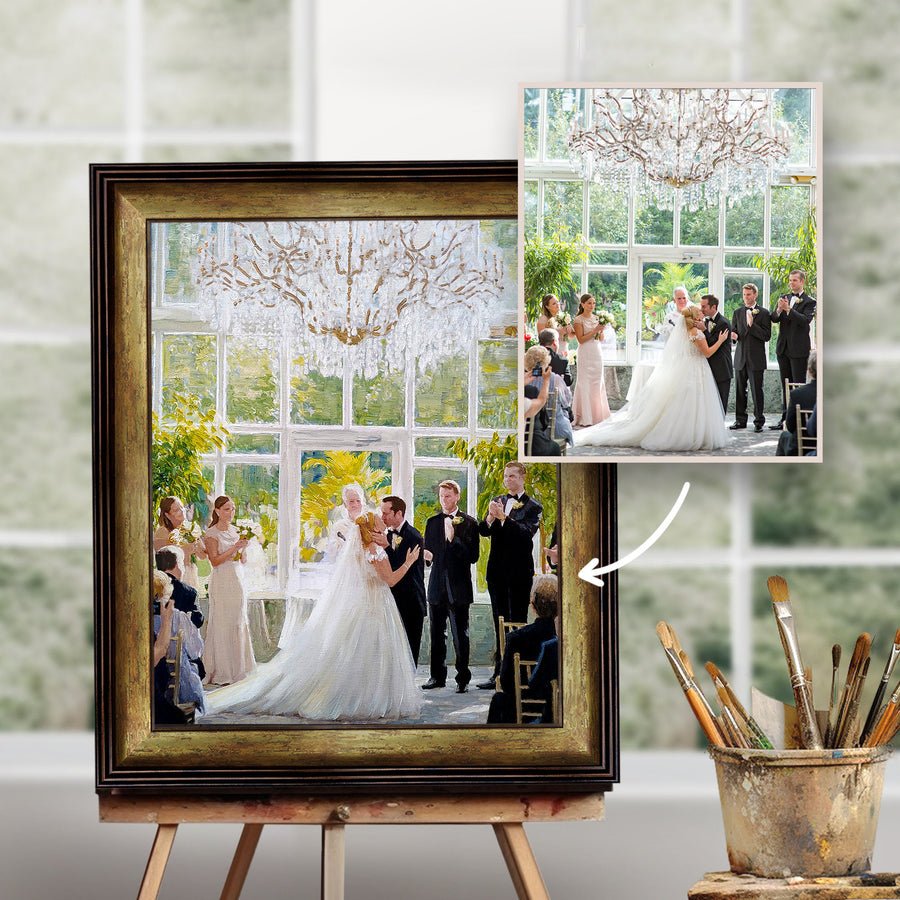
How do I turn a wedding photo into an oil painting gift?
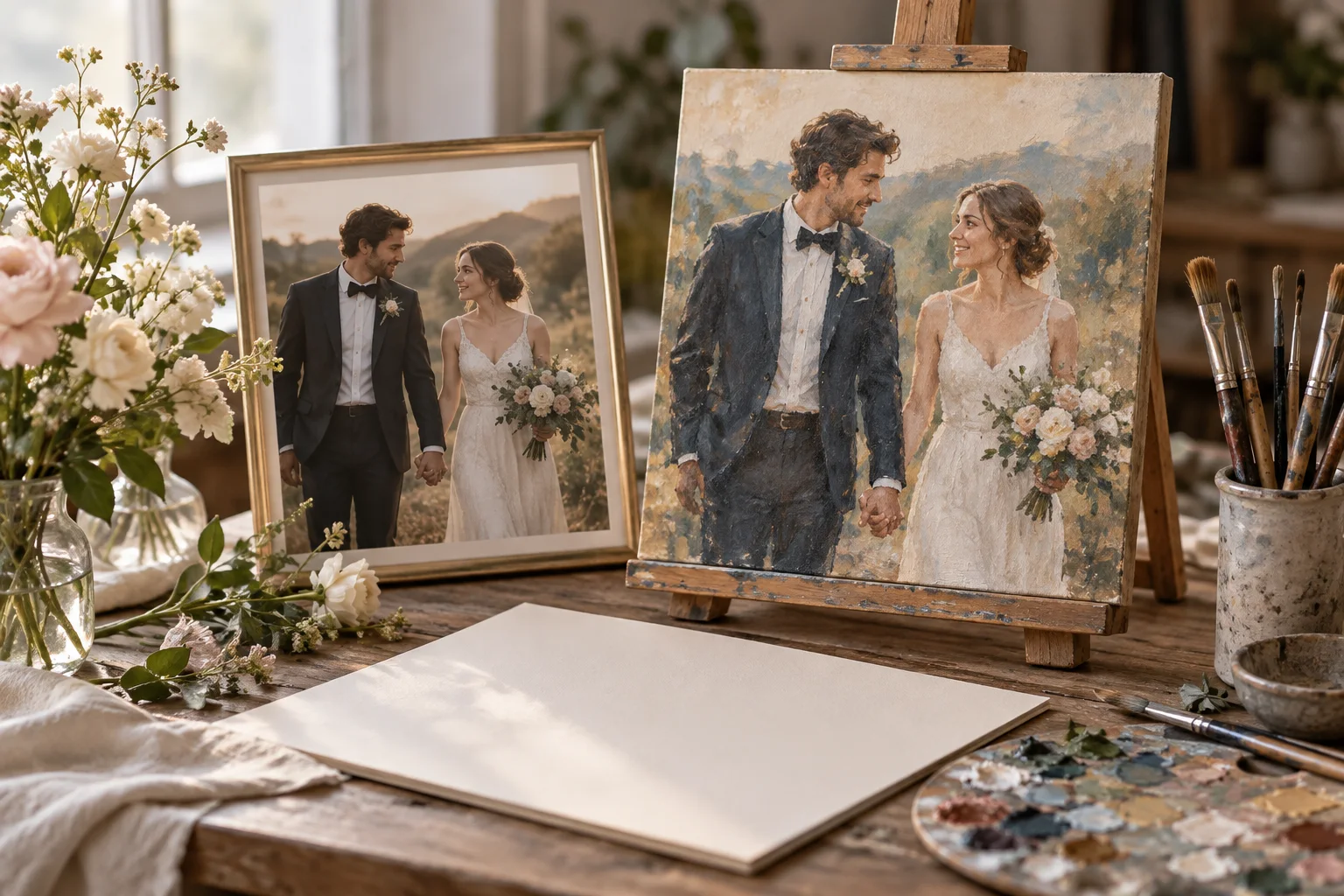
I may love a wedding photo and still struggle to picture it as a painting. A poor crop can lose the gesture that makes the moment special.
I choose a wedding painting by identifying the moment’s meaning, reviewing photo rights, and planning the crop, size and style together. I keep important gestures visible and confirm review stages and gift timing before placing the commission.
I can keep the memory personal without copying every detail in the photograph. I start with the couple and the moment, then decide what the painting should leave around them.
Which wedding moment should I choose for a painting?
I can choose the grandest photograph and overlook the moment the couple actually values. A beautiful scene may still feel impersonal as a gift.
I choose the moment by its meaning to the couple, not only by the photograph’s polish. I compare expressions, gestures and recognizable details. I use one main scene and identify any supporting photos that clarify faces, clothing or important objects.
I find the emotional center before choosing a style
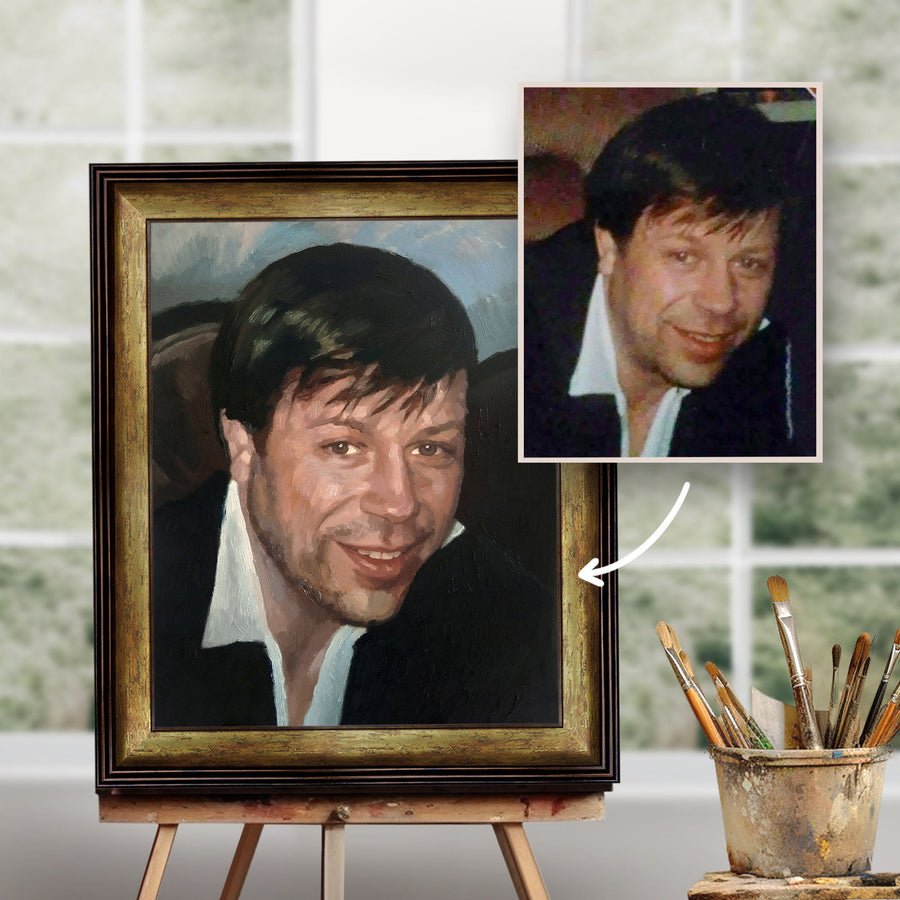
I make a short list of possible moments. A ceremony image may carry the importance of the day. A quiet portrait may show the couple more clearly. A candid glance can feel more personal than a formal pose. I write one sentence explaining why each image matters. This keeps the choice connected to the people rather than a generic idea of what wedding art should look like.
I inspect the faces and the gesture that connects them. I look at the direction of their eyes, the position of a hand and the space between their bodies. If the meaningful gesture sits near the edge, I avoid cropping it away before discussing the composition. I can simplify an unimportant background, but I do not assume that flowers, a veil or a family object are decorative details without emotional value.
I ask whether the recipient would welcome this particular scene. A public ceremony photo may be easy to share, while a private moment may need more care. I also check permission to use a professional image for a commissioned painting.[1] I keep the photographer’s original file if I can obtain it through the proper route. I use the photo painting service to review the main reference and its purpose together. I do not promise the recipient that the painting will reproduce every tiny feature. I choose the details that make the scene feel specific to their day.
| Decision | My check |
|---|---|
| Formal portrait | I check expressions before scenery |
| Candid gesture | I keep the gesture inside the crop |
| Private moment | I consider the recipient’s comfort |
How do I crop a wedding photo for canvas?
I can fit the photograph into a preview by cutting its edges. That quick solution can remove hands, flowers or breathing space around the couple.
I compare the photograph’s shape with the canvas ratio before approving a crop. I keep meaningful gestures and allow room for the frame. I review both a closer crop and a wider composition so the size decision follows the image.
I let the scene guide the rectangle
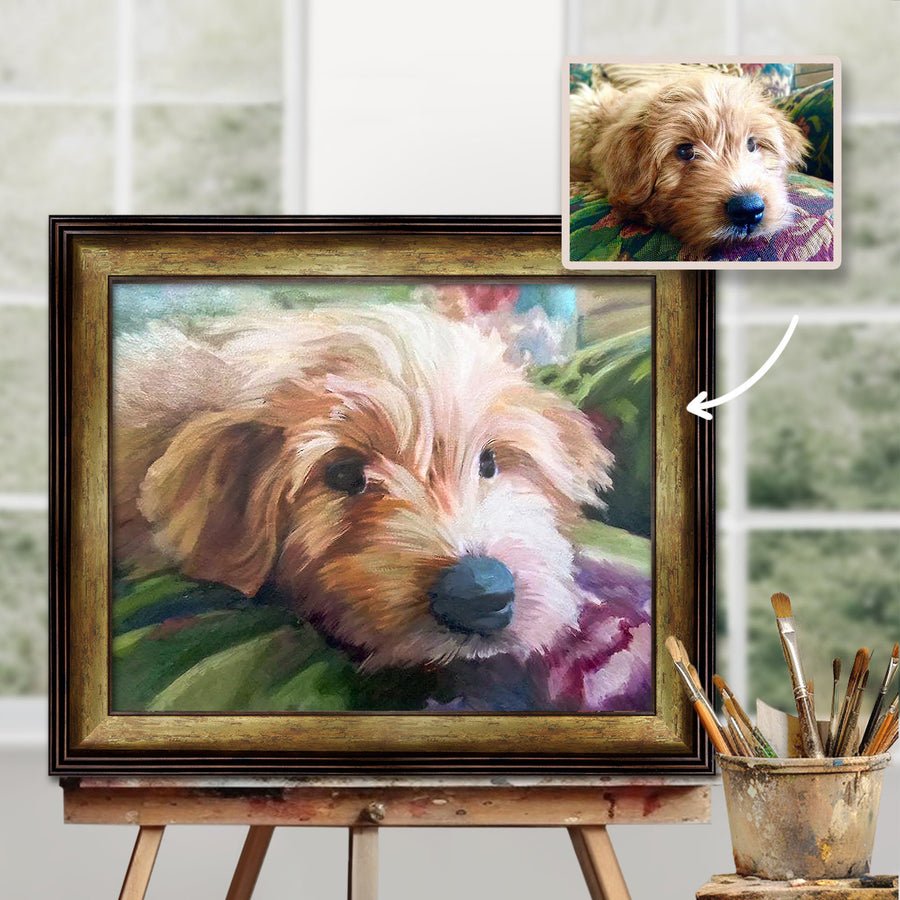
I compare the source photograph’s width and height with the planned canvas. A wide scene may need a horizontal format. A close standing portrait may suit a vertical format. I do not force the image into a favorite size before seeing what must be removed. I ask whether the artist can extend a simple background if that is preferable to losing an important detail. I keep such an extension identified as an interpretation.
I make two crop versions. One focuses on the faces and upper bodies. The other keeps more of the wedding setting. I compare them at the planned display size, not only as large images on a screen. A wider crop can make the faces quite small. A close crop can lose the shape of a dress or the meaning of a shared gesture. I decide which tradeoff best supports the intended gift.
I include the framing route in the review. A painted edge, a stretched canvas and an outer frame can affect what the viewer sees and how much wall space the work occupies.[3] I ask for the finished outer dimensions and the visible image area. I keep the couple away from a risky edge unless the close composition is intentional. I save the approved crop beside the source photograph. This helps me give specific feedback later and prevents a change in canvas ratio from silently changing the scene I thought I had chosen.
| Decision | My check |
|---|---|
| Wide venue scene | I compare a horizontal canvas |
| Faces become small | I test a closer crop |
| Hands near the edge | I review visible area and framing |
What style and changes should I request?
I may ask for a romantic style without explaining what I mean. The artist can interpret that word through different colors, edges and levels of detail.
I describe the visible choices I want: facial detail, edge softness, color range and background emphasis. I list changes separately and ask which are feasible. I do not use another artist’s work as permission to copy a protected design.
I turn mood words into visible choices
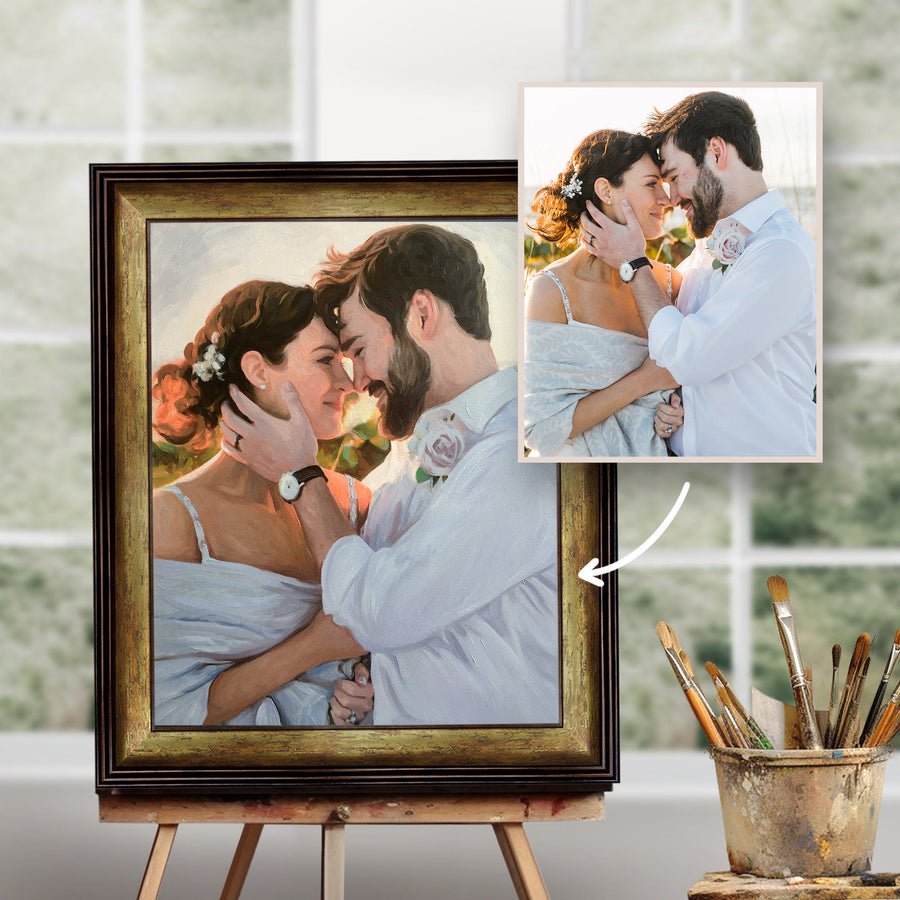
I begin with the level of facial detail. I may want the couple to remain clearly recognizable while the background becomes softer. I may prefer broad brushwork throughout the scene. I compare relevant examples and explain what I like about them. A request for gentle colors is easier to review when I name whether I mean lower contrast, warmer light or fewer bright accents.
I list changes in a clear order. I might want a guest removed from the background, a bouquet kept, or a bright exit sign simplified. I ask how each change affects the composition and the quote. I do not treat a request to repaint clothing or change a pose as the same task as simplifying scenery. A new pose can require missing information about hands, shoulders or the direction of the face.
I discuss references responsibly. I can show a mood or an approach without claiming the right to duplicate another person’s painting. The Copyright Office distinguishes the rights in visual artwork from ownership of an object or a copy.[2] I use that guidance as a reason to ask about permission, not as legal advice for every country. I keep the custom artwork brief focused on my photograph, requested style and approved changes. I also distinguish a photo-based preview from finished painted texture. The preview can help me judge the rectangle and frame, but it cannot show the exact brushwork the artist will create.
| Decision | My check |
|---|---|
| Romantic mood | I name light, contrast and edge choices |
| Removed object | I list it as a specific change |
| Style reference | I explain the feature rather than request a copy |
How should I plan the gift date and finished presentation?
I can set a gift deadline before I understand painting and shipping stages. A rushed plan can leave no time for review or local framing.
I work back from the desired presentation date and ask for separate production, review, drying, packing and transit estimates. I confirm the delivery format and framing needs. I keep the date as an agreed target rather than a universal guarantee.
I plan the whole gift route
I begin with the date when I want the couple to receive the gift. I explain whether that date is flexible or tied to a celebration. I ask the project desk to assess the route before I place the order. I do not assume that a painting can be packed immediately after the visible image is complete. Materials, surface depth and the selected delivery format can affect preparation, and the actual work needs a suitable plan.
I include approval time in the schedule. I need time to check the crop, faces and requested changes without feeling forced to approve a rushed photograph. I also allow for communication across time zones. If I want the gift to remain a surprise, I make sure I can answer questions about the couple’s preferences and display space. I avoid choosing a very large frame simply because it seems more generous.
I compare what will arrive with what I plan to present. Rolled canvas needs local preparation. A stretched canvas may still need a chosen outer frame. A framed work needs a confirmed finished size and suitable handling at the destination. I ask what packaging, hanging preparation and care information are included. I retain the approved specification and arrival photos. If the deadline is too tight, I would rather present the commission plan or choose a later delivery than request an unsafe shortcut. I keep the gift connected to a careful process that respects the image, the materials and the people who will live with it.
| Decision | My check |
|---|---|
| Fixed celebration date | I ask for feasibility before ordering |
| Rolled delivery | I include local framing time |
| Tight schedule | I choose an honest later presentation |
Conclusion
I choose the meaningful moment, preserve the crop, and define style and timing clearly. A wedding painting works best when the brief respects both people and process.